S4E7: Retrofitting the Future


 Apple Podcasts

 Spotify

 Youtube Music

 Amazon Music

 PocketCasts

 Castbox
In this episode of Sustainability Forward, we turn our attention to one of the most practical — and often underestimated — parts of the climate challenge: buildings.
After previously exploring the carbon footprint of individuals, we saw that while transport dominates, the home is not far behind. And unlike transport, buildings are one area where change can happen now.
To help us unpack the challenge, we are joined by Ascanio Vitale, a sustainability science expert with more than 30 years of experience in environmental advocacy and decarbonisation. With a background spanning engineering, policy, and consulting, Ascanio has worked with Greenpeace, WWF, the European Commission, and now leads Stop CO2, where he advises on sustainability and ultra-efficient buildings.
Together, we explore why building retrofit is still moving too slowly, what households can do first to reduce energy use and bills, why commercial buildings struggle with split incentives, whether current grants and subsidies are working, and which technologies are genuinely promising.
This is a conversation about more than carbon. It is about comfort, health, resilience, affordability, and how better buildings can become a real part of the transition.
0:03 This is. Sustainability forward with Rishi. And Carmini. Welcome to Sustainability Forward. We have a new episode, Carmini. You will remember in one of the previous episodes, we looked at the carbon footprint of an individual and we broke it down into some meaningful categories. And the top category that came out was transport. And it appeared from the data that transport dominates whether it's your car or your flights, it really dominates an individual's carbon footprint. But very close to that was home, right? And, and everything that surrounds this entity called home.
0:48 And unlike transport where behavior change is needed, where infrastructure change is needed, it might take years before any meaningful change can be noticed. Whereas if you think about your building, there are many things that you can actually do about it from a carbon footprint perspective if you really intended to do so, right? So today our intention is to go a little bit deeper into that. What can households do? What can businesses do in terms of reducing their carbon footprint? And we'll also take a look at what technologies are readily available and what is still getting in the way of actually achieving these things. And to do that, we have a fantastic guest. Carmen, would you please introduce him? Yes, thank you, Rishi.
1:34 And I'm very happy to introduce today Ascano Vitale. Ascano is an expert in sustainability science with more than 30 years of experience in environmental advocacy and practical technical urbanization, is a dual background in aerospace and electronic engineering, has worked as a climate energy energy company for the Greenpeace and WWF, served as ACOP delegate and has altered papers for the European Commission. Since 26. He has founded and directed Stop CO2 where he provides sustainability and energy consulting services and assigns ultra efficient buildings. He also contributed to development of one of the most advanced carbon footprint calculation platforms for a commercial aviation which received the European Seal of Excellence in 2017. He also served for six years as a board member for Population Matters and he rides widely on sustainability, including through is sub stocks newsletter sustainability bills that they received every Saturday is one of my, let's say every Friday. Sorry, every Friday morning in my mailbox. And I truly like it.
2:45 So ask annual. Thank you so much for coming to Sustainability Forward. Thank you, Carmi, Thanks for having me and thank you Rishi. Great, Kenya again, great to have you. Let's start with the big picture first. The headline number that we often hear is that buildings account for roughly 40% of global energy consumption. Yet even in this kind of massive energy consumption, the pace of retrofit and the improvements in energy efficiency still feel to be very, very slow. In your opinion, what is the honest assessment of where we stand today in terms of improvements of efficiency and retrofit in buildings? Yeah, sure.
3:34 It's not just about the energy consumption. It's, it's of course it's linked to global emissions. So buildings around the world account for about 15% of global emissions. And when it comes to electricity as well in it's about 55%. And waste construction and demolition account, at least in the EU, according to the European Commission, about around a third, 36% to precise of our global of the European waste. So it's, it's a huge footprint, whether it's material emissive or energy footprint. So it's, it's definitely has to be addressed and has to be addressed faster than most of other solutions because as you say, it's predominant, it's very relevant. The problem is, I mean, if you, if you consider that about 85% of buildings, at least I'm talking about the EU, because this is where my, my job focuses most on more than 85% of the buildings were built before 2001. So they were built according to lower standards and, and in a complete different world and they're going to be still standing in 2050.
4:40 So if we're going towards net zero, we're definitely missing the point when it comes to the building industry. If you add to that, that we are, we are retrofitting and building new buildings up around 1% of the total of the total market. So it's very slow. We've been, it's going to take 100 years to retrofit or to build new buildings, more efficient buildings. The pace that it's, it's been forecasted as ideal by the European Commission with the EPPD, the European, sorry, EBPD, the European Building Performance Directive, it's around 3%. So we are like a third of the pace that we should assume here in the UK, in the EU. Adding to that, every intervention is around 99% is a retrofit and 1% is a new build.
5:34 So I must specify that in in a sort of an ecological point of view, the new bills are more impactful than retrofits which should focus on retrofit and we are doing it right now. But retrofits are more cost and more costly for land owners are more difficult. You know it, it's more difficult to, to save energy retrofitting on old buildings rather than building a new one, but it definitely reduces the amount of energy, the embodied carbon and the materials that have been that have been used during the intervention. So it is the right way, but we're doing it too slow. So what are the main constraints? I believe the first one is the high upfront cost, which is what I in 20 years that I've been doing retrofits around Europe and not only there, I can feel that the first reaction whether it's luxury or middle class or social housing, the typical approach is why do I have to spend this much.
6:30 But it's a, it's a typical thing that actually it's reflected in any kind of transition solution. We have to invest when it comes to innovation, we have to invest in upfront cost in order to adopt new more efficient solutions that actually pay back with time. So the problem is when you don't have the the cash we do, you don't have the money to invest and three times you don't have the will so much because I had clients who spent more on the base than they spent on the heating system of their own, their own home. But it, whether it's cultural or structural, it's still a big problem and it can be addressed. But it needs, you know, policy needs right governance, it needs information, education.
7:12 And it's a, it's a, it's a mix of solution that must be applied and we're not doing it effectively. The second I believe could be the low owner awareness. I mean, there are people who are building or retrofitting their own home, but there are also many landlords that are building to sell or building to rent. And that's a complete different approach and a complete different perception of on how to spend the money when you're building a retrofitting a building. Because when you're renting mainly you, you think that the utilities are going to be paid by the tenants. So why do I have to spend in giving them an efficient building when it's only a benefit for them? The third one we're starting, I mean, as the pace of the retrofit is increasing, even though it's increasing very slowly, there's a lack of skilled labor. And I'm not talking about only engineers and architects. I'm talking about the installers, the contractors. I'm talking about the supply chain problem that it's not only about the cost that can be and it, it has been rising in the past during the pandemic and it's rising again now as the rest of the world is starting to adapt into the new transition solutions.
8:23 But it's also the cost of scaffolding, It's a cost of cement, the cost of, of timber of copper pipes. So it's, it's a, it's a trouble as well when it comes to heat pumps because the biggest, the biggest vendors are Korean, are Asian, are Chinese or Japanese. And we are, we have in Europe, we have some producer, but they still rely on Asian supplies. So when the supply chain starts to be constrained by high demand or problems like the energy crisis right now and you know, the straight of our moods that stops any kind of supply being being brought to Europe from Asia. The the cost of the retrofit skyrockets and people even stop their own retrofit sometimes. So let's try to to summarize the three pointer you said as can. So one was the the cost, the high retrofit cost that you mentioned, the awareness problem, I call it probably also the you have many different stakeholders, different motivation, different reason why to do it. And you mentioned the supply chain. Now I think it's a good moment to start probably splitting this problem between household private ownership versus commercial building.
9:35 Because I think the second point that you mentioned, different stakeholders, different motivation, different way to look at where I spend the money, how I spend the money, how I can get money to build this kind of business case. Let's start with the households. For an individual or homeowner or even a family living in a home, why should they care about improving the footprint of their houses? Other than doing that, I think what's their motivation? Well, there is one which is probably the the most important one and it's straightforward. It's to contain energy bills. As I said, even though it seems costly to, to undertake a high energy retrofit, higher energy efficiency retrofit, it pays back and it pays back very quickly.
10:23 Regardless the the presence of incentives which you know contain the, the up from cost. But the the payback is insured by the fact that heat pumps, for example, they consume about 6570% less energy than than a gas boiler. Insulating the house contains energy. Installing renewables on site reduces the cost of the of of the energy bills. Because a buying a solar panel, whether it's solar thermal or solar photovoltaic, it means spending not much on efficiency. It can be compared to buying a batch of highly discounted energy for 3025, thirty years.
11:08 So it seems a lot. But then if you take into account that on average you pay around if when you buy solar PV and you install it on your house, you are paying the kilowatt hours around 4 euro cent per kilowatt compared to a market price of around 304025. It depends, you know, on the energy, on the, on the state, on the country, you're paying it. But it's, it's definitely, I mean, containing energy bills means not only paying less, but also being more resilient to cost oscillation. So as the gas cost, the gas prices rise, the percentage that you're paying, if you are keeping, you're just insulating the house and you're keeping a gas boiler, you're spending less in gas, which means the marginal increase of your bill. It's lower than other people with a less insulated house. It's, I mean, if you compare a Class A building with a class E or F, which is the average in Europe, we're talking about on, on the real use case, even though in theory it's even more better than the real use case.
12:15 It's around 40 to 70% of savings on energy bills. So it's helping, if not, you know, reducing by 2/3 the energy cost and the energy cost it's about, you know, it's, it's a very high in cost voice in the in the family budget. Yeah. And getting higher everyday given today's environment now as Kenya, there is of course an element of you know what type of building you are in, what is the condition and what not. But as a home owner, what is kind of the recipe? Is there a logical sequence of things to to follow or, or is there nothing like that in this area? Is there like a framework or something that they can think about when they want to improve, improve the footprint of their house?
13:07 Sure, let's not forget it. It's not just about energy, it's also about improving comfort, improving wholesomeness of the indoor environment. When I was leading the energy campaigning with WWF in Italy, I remember that WWF was producing up research on blood from of housemaids and people working on industrial sites and working outdoor. And people living indoor had more polluted blood than living people living outdoor. Mainly outdoor because when you open your windows, you actually accumulate pollution from the outdoor environment. And these are micro dust that deposit onto the ground. And when you Hoover your place, the filter of your Hoover doesn't filter out micro dust, so you actually just raise rising them on in the environment and breathing them out.
13:55 So you're the and added to that, their use of synthetic materials for insulation, it increases pollutants sometimes because the the walls are actually transpirating, they're breathing, they're not a complete sealed environment. So the air coming in, it mixes with contaminants and addictive additives added to the synthetic materials that evaporate with time. So it's very important to understand that it's, it's a matter of energy, it's a matter of wholesomeness, it's a matter of innovation, because getting a house future proof helps containing costs in the, in the future and reduces the amount of, of operating and maintenance costs as well. What is the, there's a, there is a structure approach, There is a logic of how to intervene, but it's not always the same. It depends on the climate, it depends on the budget of the client.
14:44 It depends on, on many other factors. But mainly you should typical engineering approach is to contain the energy consumption first. So it's about insulating your house and there are priorities as well when you insulate how a home because you have to take into account that heat tends tends to rise upwards. So containing the insulating the roof is the first thing to do because it's, it's around 60% of the heat that you lose from from a home. Then you go on to perimeter walls and windows and then the basement. Of course, there's a, there's a discussion to to be done in getting more details about air tightness.
15:27 But let's start with insulation. The second step would be changing the technology with, with which you heat and cool and produce hot water in the house, because that's the main energy cost in the home. Don't forget in generally in, I mean it changes with the with climate, but generally about 80% of the consumption in the home is thermal consumption. So it's hot water, it's heating and cooling and about 20% is the General Electric consumption. So it's appliances, your hair dryer, your TV, your computer and so on, lighting and so on. Changing from a gas boiler to a heat pump, as I said, off if not more, it reduces a lot the the energy consumption.
16:12 Yeah, the third one would be start to produce on site part of your energy. So using solar thermals or APV, maybe even micro wind installations. Don't forget that heat pumps themselves are a renewable energy generator because when they produce the heating or the cooling or the heat up the the water that you use in your sink or in your shower, they use about 3, three, fourth of the energy. It's coming from the outside air or the ground or a close lake or torrent or a river or whatever. So it the the heat pump. So right, renewable energy generator, because it grows energy from the environment and uses to add it to a small addition of electricity.
17:05 You know, the smart home solutions, smart technologies, they can contribute to, to close the loop. Because it has been demonstrated that even monitoring your consumption with a smart meter, when you look at how much you're consuming every second, you know, you know that you're consuming 10P an hour or P an hour of €50 cent. I'm sorry, I'm in the UK, but this kind of kind of monitoring helps changing the behavior within the home. And it's, it's been demonstrated that it reduces the energy consumption by 5 to 15%, even 17 in some cases. It can be arranged even in offices, not only in homes.
17:47 And there are, there have been offices in the United States that did in each floor of the of the building, they did a competition of which floor was the most efficient one with prizes. So it was an incentive for employees to save energy to switch off their computer, to switch off to to lower the temperature of the the cooling system or switching off lights and so on. So let's can you. What I like about this discussion is that sometimes energy efficiency is not the sexiest topic in energy. But actually there are some really practical things to do. Technology is there and really probably simple to do it and quite accessible.
18:29 In the previous episode, for example, we talked about the pumps. I had also my own example summarizing the 4th point that you said. So insulation, hot water cell production, smart technology. I jump directly to the second one to the pump. But you made me think that probably insulation is something that we need to probably prioritize if possible. Now I live in France, so I enjoyed what is the tax benefit here for in selling it pumps, getting some grants. Many countries have different kind of strategies. So subsidies, mortgage, green mortgages, tax benefits. Do you think this is working? Is the right way to incentivize?
19:10 Are we still missing something to really incentivize early adopters going to mass market? There are, there are some good, you know, best practices around Europe that could be a good example for many, for many politicians around Europe, around the world, but not all of them work very well. They're effective in some use cases, they're they're not in others. So I believe that there's, it's quite a complicated discussion, but the, the basic principle is a rotational fund would be a very interesting point to start from. And it's it's very complicated to do it when it's easier with companies.
19:52 It's more complicated to do it with households. But it's it's about anticipating the upfront cost to to whomever has to intervene with the retrofit or new, new build. In Italy, for example, if you've got an incentive that is proportional to the expense, so it gives you back as a tax credit for five years and sometimes less about 5055% of your investment, it's a very good incentive because it's proportional to the to the cost. So it works in any kind of size of retrofit, but it doesn't work really well when it comes to middle class, low income family or even social housing. Because if you don't have the money, it's not important how much you get back. You don't just can't start your own breath of it. So the rotational funds are different because it's, it's a sort of a lease, It's lending the money that you need to do the intervention.
20:46 Then you pay back with your bills with time instead of paying with tax credits. Because some people, for example, have retired people that they don't pay income tax. So a tax credit would be completely useless. England, we've got a different one, which is a one off figure. It's very interesting. It's about 75 changing from a gas boiler to a heat boiler, electric boiler to a heat pump. And it pays back the extra cost of a heat pump and it pays even more. I mean you, you get money to to start paying your retrofit other than just the heat. And it works really well for low income families. It's very interesting. But as soon as you start increasing the the size and think about a landlord who has a big building and he's investing into a bill to rent or a bill to sell and he wants to put up a heat pump and he's looking for some incentive to help him out. Well, 7500 lbs for an entire building is just a small fraction of the cost.
21:39 So I believe that the best solution would be analyzing all the best practice and try to learn and absorb parts of the rationale that is behind this governance and start thinking about more about the income of, of the, the people who are doing the retrofit rather than the expense of the, of the retrofit itself. Because as I said, the problem of that from cost rises as you lower the income of the owners. That reduction, sorry, VAT reduction, is another kind of incentive that could be adopted because it's easier for the politicians to do it. Yeah. And now if we extend this thinking from sort of individual houses etcetera to what the commercial building sector is facing, what's your perspective on that as Kenya?
22:31 There is the problem with the split incentives owner does it, tenant benefits from energy in individual homes. You've sort of outlined other considerations, but how do we crack the problem of commercial buildings? Yeah, that's, that's, it's not only commercial buildings. I mean, if you the commercial buildings, you, you include the owners who are renting the tuned Wow, there's yes, that's a big deal. I mean, I live in a rent I I rent right now and my land landlord wasn't very keen on on changing my gas boiler with a with a heat pump. Luckily I found an energy supplier gives me 100% bio gas, but it's, you know, it's a virtual benefit.
23:12 It's not a real one because I'm still emitting CO2 locally. So what, what can be done? I mean, what I have tried to to tell him is I can contribute to part of the retrofit because part of the benefit falls into onto my own. But I try to let him understand that he actually it's a benefit that comes that goes to that. I mean, it's a benefit for him as well, because future proofing the house means that he can raise the rent for to to other people in the future and increase his margin on on the House. It's even more visible when when it comes to offices. For example, most offices, at least here in the UK, is less frequent in Italy and Southern Europe. But they pay the rent, including the energy bills.
23:56 So in this kind of forfeit case, it's even the tenant is not keen on on doing any retrofit because he says I'm already paying a fixed price. Why should I care? So in but in this case, it's the owner who has the the higher benefit. Because what I tell them is if you retrofit your own office, you actually, you're increasing your, your margins because you can, you know, not rise the, the rent and, and have the people staying more longer for, in your building while you're increasing your rent because the actual real, the real bill goes down. And so there are, there are ways to do it. There are, there can be special incentives. I will talk.
24:37 I was talking about the VAT reduction, which is still attractive for some land owners. There are European directives that actually oblige the landlords to, to retrofit their own buildings. It's kind of a slow directive. And that's, that's a bigger discussion about the political will and the political ideology and how they, they influence the, the governance on, on energy efficiency. But I believe that most of the contribution would come from governance. So we need to oblige to do it because it's something that reflects back onto social cost. Our taxes pay for all the externalities of our energy consumption. So whether it's pollution from gas boiler, which reflects on to health, health care costs because it produces pathologies, it kills people around the world, it's it degrades monument, it kills biodiversity, but it's also the cost of dangerous climate change events.
25:37 And these are all paid by everyone in, in our taxes. So there must be a way, there should be a way to let everybody comply to, to the transition because it's it benefits everybody. What was that? Carminate the The Tragedy of the Commons? I think it was one of the episodes we did related to what you're what you're what you've just mentioned. Yes. And actually we talk about behaviours, we talk about policies. Now the importance of let's say that the government to shape to shape. Let's go back a little bit on the technology angle. We have three engineers here in the podcast. So we'll also sometimes look like to go back and look at what is happening in the market.
26:23 But I'm interesting asking you to to know from your perspective what which generally excites you right now. Probably there are technologies that are ready, deployable or very close to readiness to go to market that you think they. Serve much more. Attention that they get right now. What's your view? Yes, there are upcoming interesting technologies. I mean, of course we, you know, everybody going around social networks or browsing the news, they reads from time to time about some miraculous solutions, new batteries that works with water and and so on. I'm generally by quite skeptical about that. I follow scientific papers, I follow the the market, I follow vendors and industry instead of just relying on generalistic media.
27:10 So there's a big difference between announcement and what actually can be scalable, what actually can be reliable in enough to enter the market and and be this being disruptive for the market. So I believe that right now there are two main very interesting technologies that are very close to to market. And the first one is perovskite. It's a, it's a different material than the silicon, the typical silicon that is used in solar PV panels and perovskite. It actually increases the efficiency by 4050% compared to the traditional solar PV. That means that we can reach efficiencies, total efficiencies around 35%. Right now it's around 2224 and it seems a little marginal increase, but it's a big contribution.
27:56 Just think about utility scale PV which are the most needed source of energy around the world and it's the fastest 1 rising right now. We actually it took cars around 6570 years to reach a first terawatt around the world and in about two years where we are reaching the the the second terawatt. So the the exponential growth of this solar technology, it drives driving the transition, but it occupies space. Of course it's a very small fraction. I mean, it's about 0 point something percent in depending on the country, but it's a very small land use. But still if we account that we with perovskite, we can reduce the surface by 1/3, it means that we can produce 35% more energy or we can use less land to produce the same amount of energy with the very comparable costs. So it's a very interesting technology and it's not only about utility PV, but it's, I've got a friend working on research and they're researching transparent film based on perovskite.
29:02 And that means that we we will be able to apply a solar PV technology on almost anything on a track, on a backpack, on a device, on windows, in in skyscrapers where it's very difficult on high rise building to actually have the surface enough to to auto produce the energy that is consumed by the building. So using vertical facades helps integrating the the missing surface. So there are so many different applications and the problem right now is not much the energy gain that you get because in lab tests it's very promising. But right now the problem is that with UV light, it actually degrades with time faster than silicon. So they are working on tweaking the crystals and adding different materials so that this, these panels can last as much as silicon panels.
29:58 But I strongly believe in what the tandem cells are going to be doing in the next 10-15 years. And I, I guess, I mean, there's already a Korean company that is building them as producing them. The big scaling it's going to, it's going to happen in five to 10 years. And tandem cells are very nice because they apply perovskite over the silicon panels. So we use traditional technology and we've got the, the technology, you know, the industry already with all the machinery needed to, to build it. We just have to add and deposit a different material and it increases the, the gain. The second one is batteries. We don't have to forget the, one of the most important thing when we increase our energy mix onto variable renewables is that we need storage on a daily basis and on a long, on long term seasonal terms. The most important one is the daily, the daily one and chemical storage is increasing the the role because the the cost has been falling down.
30:58 It's been about 90% in the last 10 years. It went down. So right now solar PV plus storage, chemical storage costs less than gas, it costs less than than coal, wind and solar. Together with storage they can ensure a very constant supply of energy throughout the day. So, so it takes off any kind of bulk production. So I refer to any thermoelectric production which is very pollutant like coal or gas and nuclear as well which is very expensive. And with these solutions, batteries are very important. So right now we are proceeding towards solid-state batteries. They're going to be having a very long and much longer life cycle and, and their, their efficiency, it's increasing right now it's slower than the lithium one, but it's going to get rid of the critical material, materials that are difficult to find and costly to extract. So sodium, for example, can be derived even from desalina tion plants.
31:59 So it's actually it's a benefit because it reduces the impact of desalina tion, which is increasing around the world for climate change. So there's a, there's a synergy between technologies that are very interesting. 22 seconds can you so do wrap up here we talk about the energy efficiency, we talk how to accelerate very quickly. If you can remove you have a magic bond and you can remove one of the roadblock today to get scale with energy efficiency in home which one you pick first? So, behavioral Financial Policy regulation technology. Yeah. Then there is one that it's been obtained 20 years anywhere in Europe, a little bit less elsewhere. But you know in Europe we've got a very huge historical heritage when it comes to architectural buildings. So there's a regulatory constraint that it comes to aesthetics.
32:59 So in Italy is very strong. I mean, if you, if you ask to install a couple of panels over a roof, they're going to start saying, yeah, but I, I don't have to see it from Rd. Rd. level. I don't want it to be a different color because it's ugly. And it's kind of, I remember discussion with a close friend of mine, a colleague, an architect, a very, very good experienced architect. And I was telling him he's an Austrian guy. And I was telling him in Italy that the incentive was higher if you flush the panels on into the roof, a little bit lower if you were putting them on the roof and even lower if the roof was flat. So you had to rise the panels over the roof and let them be more visible. And he said, why do you pay less? And I said, because, you know, because they said it's ugly. And why suddenly I would be proud of installing and showing that my house is actually innovative. And that's a huge constraint because many times we we are stopped and we have to wait for years, sometimes not even months to have the authorization to proceed. And this is really stupid.
34:04 I mean, again, it's ugly. I mean, aesthetics is very subjective, first of all, but it's, it's nonsense. So we should adopt and we've got the technology to to reduce this visual impact, but it's not an environmental impact. Environmental impact is the gas boiler that I'm going to install if I don't in solar, Solar thermal panel that produces the hot water without gas. It's, it's just bonkers, this. Has been a very rich conversation, so thank you so much for coming to the show before leaving. Where can people follow your work? Well, for Italian speaking audience, I've got the sustainability deals which is at ascano.substec.com and I as you said, I mean I'm not very regular.
34:51 It depends on how much work I have to do, but I'm trying to be as regular as I can. It's been going on for a couple of years and it's gathering interest and I have an audience that I'm really proud of. And it humbles me because I've got university professor and EPS, you know, European Parliament members. I've got lots of researchers and consultants, but I am starting it in English as well. So it's at stopco2.subsec.com right now. There's already a few pills being translated and I'm going to insist in the future and increase the, the number of English, English articles. So that's, that's one way. And you know, follow me on LinkedIn as well.
35:32 You can find me on LinkedIn and you can contact me if you need anything. I'm there for consultancies. Great. So Cameron, as I said, the beginning one of our previous episodes told us that buildings are a big part of the climate challenge. I think today's episode also highlighted the fact that it's not just a climate challenge. There are many other challenges in terms of their footprint that pose, you know, a big problem for us. But more importantly, we also learned that there are big opportunities in the building sector as well with as can. We explored why retrofits are moving slowly, what households and businesses can actually do today, where policy, financing, and even your sense of aesthetics can play a role. And very importantly, we heard that it is not only about carbon, it is not only about cost. It also has the aspect of comfort, health, resilience, and making our homes and workplaces fit for the future. So for all of that, Ascano, thank you very much for for joining us on this episode of Sustainability Forward and Sharing your expertise so, so generously. And thank you, Carmina, as always, for for a great conversation and thanks to all of you around the world for tuning into Sustainability Forward. Thank you, It's been a pleasure.
36:52 Thank you, Richie. Thank you, Scan.
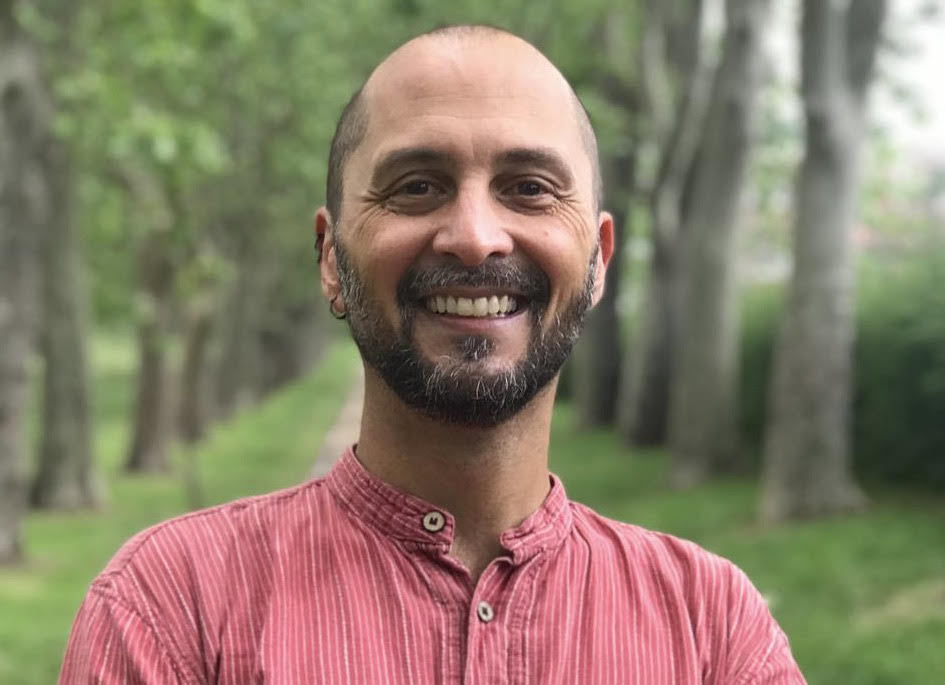
CEO, StopCO2
Ascanio is an expert in sustainability science, having developed a multidisciplinary knowledge base over the course of 30 intensive years dedicated to environmental advocacy. With a dual background in aerospace and electronic engineering, he worked as Climate and Energy Campaigner for Greenpeace, WWF, and as a COP delegate. He has also authored papers for the European Commission.
Since 2006, he has founded and directed Stop CO2, which provides comprehensive sustainability and energy consulting services to companies and designs ultra-efficient buildings. He contributed to the development of the most advanced carbon footprint calculation platform for commercial aviation, which received the European Seal of Excellence in 2017.
He has served six years as a board member of Population Matters an international charity dealing with overpopulation.
Ascanio has written for numerous media outlets and curates his own newsletter on Substack (currently in Italian and soon in English): Sustainability Pills.