Bread, Soil, and the Climate Story We Can All Taste


 Apple Podcasts

 Spotify

 Youtube Music

 Amazon Music

 PocketCasts

 Castbox
What does a loaf of sourdough have to do with fighting climate change?
In this episode, we sit down with Maddie Hamann, co-founder of PACHA Bread, to explore the unexpected connections between regenerative farming, food allergies, zero-waste packaging—and the future of sustainability.
Maddie shares how she made the leap from ocean science to sourdough, and what it’s really like building a purpose-driven business while raising a young family. We talk about sourcing from regenerative farms, designing compostable packaging, and why your grocery list might be one of the most powerful climate tools you have.
It’s a grounded, inspiring look at how climate action can begin right in your kitchen.
0:08 Welcome to Sustainability Forward where we explore bold ideas, real solutions and the people driving change for a better, greener future. I'm Rishi, your host, and with me, as always, is my Co host Carmen. Welcome, Carmen. Rishi great to be here today for a very interesting episode. Absolutely. I mean, we have been talking about climate change for a while. Many of our episodes have centred around, you know, that topic. But when we think of climate change, what, what usually comes to mind, usually it's fossil fuels, cars, electricity, heavy emitters in the industry. But there's another major contributor that often flies under the radar, and that is our global food system. What do you think?
1:00 Yeah, good point, Richie. So food, agriculture and broader land use accounts something around 20 to 30% of all greenhouses emissions. And this goes from how we grow food to how we transport it, how to deal with waste. So our food systems are shaping the future of the planet in the ways we readily talk about. Yeah, but there's a there's silver lining here. And the hopeful part is that the way we feed the world doesn't just have to be the part of the problem, it can also be part of the solution. According to Drawdown Food, there are two powerful levers in in this area. 1 is cutting emissions and the other is healing the land through better soil health and ecosystem restoration. And this brings to a questions that is probably the base of this episode.
1:59 Is there a way to eat food that heals the planet? So today we have a guest to talk about it and she will tell us a little bit more about this one loaf at a time. So we have today Mehdi Upman. She's the Co Founder Director of Marketing at Patch of Bread, where she applies an extensive scientific background to drive the company's mission of promoting regenerative agriculture and sustainability. Many year olds PhD from the street institution of Asian Graphic, but she transitioned from the field of her science to marketing in order to make a direct impact on common change to business. Her dedication to environmental sustainability is at the heart of bacha marketing strategies, ensuring that the company's values are reflected in every aspect of the brand. So, Maddie, welcome to the show.
2:59 Nice to be here, thanks for having me. Maddie Carne has given us a quick view of your career, your bio. But we are, we are obviously a very curious bunch, so we'd like to know how you went from being our science PhD to sustainable entrepreneurship and how sustainability became central to that life and career. Yeah, well, I would say actually that the sustainability being central to my life and career is kind of what drove the shift. I, I don't know, my parents, I think it start started with them. They always composted.
3:43 My dad's an avid gardener and we spent time out in nature walking through the woods, and I'm just enjoying the natural beauty of the earth. And I, yeah, a lot of my academic career when I was young was driven more by like, OK, I'm really good at math and science and like, I should, not everybody is. So I should put my skills to good use. Like I've, I've been given that gift, so I should use it for, you know, making life better for everyone. And that drove me to, you know, first I got a pH or sorry, I got my bachelor's degree in civil engineering. And then kind of in, in my studies of civil engineering, I was realizing like how much, how much of the just like just construction, how much of an issue the materials that we use are.
4:47 And I started to started to learn more about that. And I also learned, I learned about fluid mechanics. And when I graduated, I had learned about the field of oceanography. And I thought, wow, OK, so I must, if I like, if we're going to do something about climate change, we must need to understand the problem better. And so I want to be a part of that. Like I want to go and use my math and science skills to understand and help humanity steer the ship through what's coming. And I had an amazing time and grad school was super interesting to learn about the physics of the ocean and, and all their aspects of oceanography as well. But in my studies, I realized, like, wow, we know a lot and there's a lot we don't know, but we certainly know enough to start making some changes in the way that we are living and the way we are providing goods to the growing population on earth. And yeah, it just seemed to me that knowledge wasn't the thing that was going to drive those changes. And even just a couple of years into my degree, I, I've had the feeling that I would, I would shift somewhat not to being just like a straight researcher, but
6:18 maybe being more in like the science communications or being at the intersection of art and science or some, some piece that would start like engaging with the populace. And, and then about a year before I finished my PHDI met my partner, Adam, Adam Heiner. He is, he's a serial entrepreneur. And now we joke that he's a pseudo serial entrepreneur. That's a bad joke. Buckley does a pseudo serial, but he has owned and operated multiple businesses. And he at the time he was involved with his most recent company, which is called Buch Craft. It's a hard kombucha.
7:03 It's pretty well known out here in California, but it's probably not global. And he was basically working with their farmers. And his role had, you know, he had kind of like hired himself out of all of the other positions that he had worked for the company. Somebody else was doing that stuff. And so he was focusing on doing the impact and using buch crafts dollars to find better ways of sourcing the ingredients and working with farmers to improve their farming methods. And, and I started learning about regenerative agriculture, which is what we're going to talk about, I think today and I.
7:48 Yeah, I just regenerative agriculture. Let us understand a little bit more about it. Yeah. So essentially at, at the heart of it, regenerative agriculture is agriculture that cares for the health of the soil. And there's a lot of, there's a few different aspects that really make regenerative agriculture what it is. But essentially when you take care of the soil, you have a healthy thrive. I mean, everybody knows the difference, right, Between a handful of dirt, just like, you know, stuff that just blows away in the wind versus soil, like black, moist, like just stuff that you're like, Oh yeah, that's good.
8:35 That's gonna make a good tomato. And I, I say that not maybe not everybody knows that difference, but it's a yeah, the black soil. What the difference is that it has a whole ecosystem living inside of it. There is from all the levels, microorganisms, worms, nematodes, like lots of different creatures that are, that are actually carbon based life forms that that build this, this ecosystem that has air and water. And what happens when your soil is really healthy is that one, like the plants are really healthy. The, there is a balance in the ecosystem, the soil, the soil ecosystem and the ecosystem that includes the plants and the pollinators and the different things that contribute to the ecosystem.
9:30 There's a balance that allows for resilience. So pests tend to not be able to take over because there's there's the pest, but then there's also the thing that eats the pest. So you have much smaller issues with, with disease in your, in your crops and the water and also the water is able to penetrate in the soil. So the like it's like a sponge, right? If you can imagine like taking a handful of dirt and pouring water on it, like the water is just going to like wash the dirt away. Versus if you have a handful of soil and you pour water on it, the water soaks into the soil.
10:11 That's what happens when you have healthy soil on your, on your farm. So you can use more effectively. It prevents flooding or or diminishes flooding, which is a big issue out here in California and in different places in the world. Yeah. And then also there's a balance that includes animals and animals that fertilize the soil with with their manure. And yeah, there's a lot of pieces that go into it, but essentially it's like it's a healthy ecosystem that supports the soil and make sure that the soil is really healthy. But it's healthy for the soil, it becomes carbon sequestration, also medium if our diversity, peer diversity yells the nutrients of the food. So there is a lot of good effects. So probably This is why it matters to talk about the culture.
11:09 And I love your example of the way of putting water on it. Something that we see during summer, for example, in this part of the world in Europe where we have 2-3 months of no rain, is when we go to September and heavy rain starts and all the rain flushes away. It's not the assorted in the ground, in the soil. And this is one of the reason because the soil cannot keep that amount of water whole in the southern anymore. So let's stop then on the patch approach and why it belongs to this regenerative agriculture. So what are you doing in this kind of space? Yeah, So kind of wrapping up that story, I, I, I after seeing my partner doing what he was doing with Butch Craft, he was thinking of. So we were, we were making this buckwheat bread and we had been making it for a couple of years and it's delicious. It's gluten free, it's made with just a few simple ingredients and it feels like really nourishing in your body. And he wanted to turn that into like he wanted to give people access to this bread, which is life changing. If you're, you know, if you're not able to eat gluten or some of the additives that get put into bread, it's like, Oh my gosh, I can eat this two ingredients. Are you kidding me?
12:32 And so he wanted to start a business with it. And for me, I just realized that we had an opportunity to use business to transform acreage, like to grow buckwheat specifically for the purpose of making our bread and to help farmers implement regenerative practices on their land. So buckwheat is a, it's kind of inherently A regenerative crop. It's it's used. So there's actually like a lot of buckwheat farming. A lot of buckwheat is grown in the United States, but not much of it is farmed in the sense that it's not harvested because it's used as a, it's used as a, a cover crop. So they'll plant it in between crop rotations just to have roots in the soil and to keep that soil from blowing away in the wind.
13:27 Like they just want, they just want to keep the soil healthy. And most of the time they'll right after the buckwheat flowers, they'll till it back into the soil so that it fixes nitrogen and then they'll plant something else. But you can, you can actually harvest the buckwheat as well. And one of the really nice things about that is it's usually an additional crop for the farmer because it has a short grow season. They can often kind of slot it in between their spring and their fall crops and they're able to have a third rotation of crops. And, and get the benefit of the buckwheat is it's, it's not wheat, first of all, it's, it's this really beautiful plant.
14:15 It has like these little white flowers and sort of broader leaves and it just sprawls out all over the field. And it attracts a multitude of different pollinators. There's like all kinds of beetles and different bugs that come to pollinate the to pollinate the buckwheat. And it fixes nitrogen. And it just is like it in and of itself is so good for the soil, even if you grow it on a conventional farm. But we go a step beyond that. We, we're certified regenerative through an organization called the Soil and Climate Initiative. And essentially what we do is for every acre of buckwheat that we contract for the year, like we say, OK, we're gonna need 1200 acres of buckwheat this year. And for every acre that we contract, we pay a fee that goes to the farmers to help them actually transition into regenerative methods.
15:16 So yeah, our business is like the more bread we sell, the more acres of regenerative farm are created in the country. It's very, very interesting. Like like you said in your joke earlier, buckwheat is a pseudo cereal. It doesn't grow on the tip of a grass like most cereals, right? That's the that's the interest. But it's used like a cereal. That's why it's a pseudo cereal now. So this is kind of the front end of bacha, I guess you know the regenerative agriculture where the ingredients come from.
15:57 Let's maybe look at the the packaging side and your contribution to the zero waste mission right here in in Europe, there's a sustainability movement is at it's peak. That's what we feel like, right, When we go buy bread in in a local market, of course, the focus is on, you know, on the taste, the ingredients, but also on the packaging, right. It's typically wrapped in a piece of paper and that's it. Then no plastics usually. Yeah. From a supermarket, that's a different question. But usually you just get the loaf wrapped in a piece of paper. That's it, right.
16:38 Tell us a little bit about what you are doing with respect to, you know, innovative compostable packaging, things like that. Yeah. So again, like our company, we founded it, we started it because we want to, we want to be doing business in a different and better way than we see happening here in America. And so from the beginning, we've had, we've committed to having fully home, home compostable film. And yeah, so we're all of our bread comes in a home compostable film bag that's made from potato starch and it can break down in a home compost in like 90 to 120 days, depending on how good you are at composting. And then are the closures the little, like the little clip that keeps the bag shut is actually made of cardboard instead of the plastic that you typically see on it on a bread package.
17:48 And yeah, we've estimated that we've that we've saved like 18,000 lbs of plastic from going into production since we founded the company, which is crazy to think about. When was that, Mehdi? When did you when did you found your company? We started in 2020, right, Right when the pandemic was yeah, yeah, taking off. Got it. Was fun stuff but yeah, we've sold a little over half a million loaves of bread since then. Wow yeah. Interesting. And you know with the with the with the compostable packaging, it's it's it's a challenging space. The plastic just performs in a certain way that's very hard to mimic with something that will break down right. Like we would love to sell our bread and paper, but we just, we can't because of the way that we are selling, like because we're selling into supermarkets.
18:45 And in the frozen section, it's just a different model. It's not like the local, local bakery model of things, but a lot of products that would like to use compostable film, the it's really hard to get a barrier layer. So there's like oxygen can exchange, but because of because our product is frozen and it's kind of stands up well to fluctuations in temperature. Like you can freeze that thought a couple times and it's, it's totally fine. Not every products like that, but then also compostable options are so much more expensive than the petroleum based plastics. And I think that's something that a lot of companies run into is they, they start off and they're like, OK, well, we'll just, we don't have the money right now to pay for compostable options.
19:40 But once we hit this certain mark, once we get here, we'll start using compostable. But like you never get there. Like you never get to a point with your company where you're like, oh, we just have lots of extra money. Not never, but it takes a long time. And so it just to transition to a package that's. Four or five times more expensive than the petroleum based alternative is a big pill for most companies to swallow, so we just built it into the company's DNA from the beginning. Yeah, this brings me to to a question. So talking about food, I think you need to balance as you said a few components.
20:26 So he has to be secure, he has to be accessible, yes, to be sustainable and still has to build your business case. How you balancing all of these elements remaining true to your missions and what they're trying to achieve here? Yeah. Well, that's a, that's an interesting question. So I would say that like the best answer that I can give you right now is that we're still, our company was founded by, was founded and invested in by people who align with our mission.
21:12 And so we, you know, we haven't taken on large, large investment from BC or a larger food holding company or just a shareholder that would encourage us to focus more on profitability and less on our mission. So yeah, that's really probably the best answer that I can give you. And also just Adam and I are still running the company. Things can change when new leadership steps in or when a player comes to the table with different with I should misaligned goals, yeah. And another question, Mandy, is how, how you can reach scale with this or is it feasible to reach scale considering the resources you need, also natural resources. So with your raw materials, how much can you scale, How quickly can you scale this if you really want to democratize this bread? So right now there's right now there's no, there's no issue in sourcing the materials that we need to get to the scale of profitability.
22:36 It is, it is a sizable, you have to do quite a bit of business. Like I think we're we'll be profitable when we're in something like 2000 or 2500 doors and we're in about a little over 1000 right now, maybe a little bit more than that. I haven't checked those numbers recently. It's a sales side. So you know, double what we're doing right now. The sourcing buckwheat is definitely going to be a challenge. And it is certainly possible that there will be a time when we're like doubling growth and we're, you know, three or four times as large as we are right now when we won't be able to scale the regenerative side of things in a single year. But the what's, what's really encouraging is that we have one that this crop is actually a, a, a lot of farmers would love to be growing buckwheat.
23:39 And the problem is that there's not much of A market for buckwheat in the United States like in other countries in in Asia, buckwheat. In Russia, buckwheat is a staple. People eat buckwheat and they know about it. They want it. There's a demand, so people grow it. So as we expand the market here in the States, it actually is enabling farmers to grow something they would like to be growing. And the other piece that is really working in our favor is that we actually work with one of our farmers. His name's John Stropus and he owns a like a, a food. What do you call that?
24:20 It's like an ingredients company. And he actually goes out and talks to the farmers in his network and says, hey, I need to I need to grow more buckwheat for my client Pacha. And if you want to jump on the jump on all you have to do is get certified through this regenerative certification. Now it is kind of a big ask for a farmer to do things differently than he's done then, you know, like most of the farmers, this is the way my dad taught me how to do it. And this is the way that his dad did it before him. I think like it's and it's for someone outside of their industry to come in and say, hey, I think you should start growing your food regeneratively. You know, like I'll buy your buckwheat from you if you grow regeneratively.
25:14 And they're like, why? Like that sounds like a lot of work. I'm not, I don't want to do that. But we have on our side, on our team, we've got a really passionate farmer who speaks their language and he says, hey, you should do this. And like, here's here's all the reasons why. And the main one being that it's going to be better for your health, it's going to be better for your profitability. You're going to be able to, you're going to be able to sell this product and reduce the amount of money you spend on chemical fertilizers and pesticides. And like, this is gonna be better for you.
25:56 And I've done it. And here's like, here's my track record and I can help you. So that's a totally different conversation than someone coming in and just being like, hey, you're regenerative agriculture, you should do it. And yeah, actually that's one piece that we didn't discuss when we're talking about regenerative agriculture. So one of them, like one of the primary goals of regenerative agriculture is to reduce and eventually eliminate all synthetic inputs. So any kind of pesticide, any kind of fertilizer that's made out of petroleum, which by the way, in case you didn't know, all of these things are made out of petroleum. So, and a lot of like the pattern that happens in the food system is that the, the chemical companies are put are saying like, OK, here's the, here's the formula, here's the, Oh my gosh, what is it?
26:53 Roundup? Here's the herbicide that you'll need to get your get the best yields out of these crops. And so here's your fertilizer, here's your pesticides. And this is like, this is how you'll maximize your yields. And you do that for a few seasons and then you see the results and you're like, OK, I got to keep doing this. Meanwhile, the soil is being depleted every year and you need more fertilizer every year to make the same yield that you made the year prior. And so there's just like they're getting getting sucked into this loop. It's hard to see the way, it's hard to see the way out of it. But what regenerative agriculture does is it it eliminates the need for those synthetics and then farmers don't have to spend so much money to grow their crops and they can be more profitable. It's like the whole system that regenerative agriculture supports the entire system.
27:52 Everyone who's involved from the smallest levels up to the up to the, you know, the, the farmers who are holding the large plots of land, like everyone can benefit from it, except for maybe the big chemical companies who want to sell their petroleum, some fertilizers. Maybe it's a good time to ask where, where, where can people find your bread? So we are currently, we're in the US, You can buy our bread directly from our website, livepacha.com and you can also find US nationwide at Whole Foods. And then we're in a few other chains that are regional.
28:37 Natural Grocers carries our products, New Seasons, Gelsons, Erawan, some smaller, some smaller chains. If you are would like to buy our bread at a store, you can go onto our website and look at our store locator to find a location near you. Next, next time we're in the US, we'll go to a Whole Foods to get your read. So, so where, where do you go from here? What's the vision in terms of the company? Where do you think regenerative and sustainable food business is going? If you could talk a little bit about that. Yeah, well, gosh, there's definitely a movement of regenerative food happening right now. You know, it's not as so like regenerative is still not a term that most consumers are familiar with and it's not a term that helps sell a product at the moment, unfortunately, because people don't know about it, they they're not willing to pay a premium price for a product that has regenerative ingredients. But if you go to the food Expos like if Expo W, which is one of the biggest Consumer Packaged Goods shows in the world, there is, you know, people are talking about it. There's lots of, there's panels, there are groupings of companies that are, that are working together. There are, there are certifications that are emerging.
30:08 It feels very much like the the food industry is realizing this is where it's going and starting to pay attention. We are Pacha is a member of a coalition called the Regen Brands Coalition. It just started this year, but it's a group of about 40 brands that are all that all have at least one certified regenerative product. And you know, we are what we're really working on is like, OK, how do we collectively as brands, how do we amplify our voice? How do we make the how do we get through to the people who make decisions about what goes on to the grocery shelf? Like how do we communicate with them about the importance of regenerative?
30:57 You know, one of the other really cool things that we have seen in our journey is that there are like, like with Whole Foods, for example, they really care like they are, they're, they are, they're very strict about their use of the word regenerative. And if you're not actually regenerative, they're not going to let you put it on your package and sell it at a Whole Foods store. And then also, you know, we, we went from having no distribution in Whole Foods to being a nationwide brand. And that's not, that's not a common occurrence. It does happen, but many brands start in one or two regions. You know, they're just in Southern California or they're just in the Northeast or whatever.
31:43 But really like in the conversation that we had with our buyer, the one who decides what goes on the frozen bread shelf, I'm pretty sure she picked us up because we're, our packaging is compostable. Like she was like, this is a bread brand who's doing something that I've heard other brands say they can't do. All right, let's bring them in. Let's let these other brands see what can be done and hopefully follow in their footsteps. So there's some some there's really good traction, and there's also a lot of work to be done. Yeah.
32:26 You know, like in the United States, 1% of farmland is certified organic, and that's not regenerative, that's just organic. You can still use like certain organic pesticides and fertilizers and whatnot on those fields. Yeah. And so one of the, one of the things that's kind of a TBD within the regenerative space is figuring out whether the definition of regenerative agriculture will say that you must be organic before you can be regenerative.
33:07 And I, I don't know where that's gonna land. There's a good argument both ways. You know, on one side, Yeah, it really feels like if something is regenerative, you shouldn't be putting synthetic pesticides on it, right? Like Roundup and regenerative just like that. Doesn't seem like they go in the same sentence. However, if we want to be you like fully utilize regenerative agriculture for the climate, yeah, for the climate change buffering that it can provide, we can't just start transitioning the 1% of farmland. We need to be transitioning the 99% which is still conventionally farmed.
33:54 So that one, I don't know how, I don't know how to answer like the, the trajectory in that sense. But I, I think like it's gonna take five years at least for the regenerative, the term regenerative to really permeate the consumer awareness in a way that makes it like, OK, I'm gonna put that on my package, on the front of my package because it's gonna get a consumer's attention. I think that's at least five years away. And but I see that happening and I definitely see more brands and investors and people who are aware that our food system is not, you know, there are there. It's estimated that we have something like 60 harvests left on a lot of the conventionally farmed land in across the world. Like that's like 30 years.
34:46 If we keep farming the land in the way we're doing it, we're going to lose all of our topsoil. It's just going to like, we're going to have another decibel on our hands. It's just going to blow away, which is crazy. It's like, it's crazy, but it, it also doesn't have to happen. And it's, you can quite rapidly actually improve the, the, the soil quality. And you know, I don't think we've said this directly in like in this conversation, we've kind of danced around it. But when the soil is healthy, like I said, it's got all these carbon based life forms in it. Soil is a huge carbon sink.
35:29 It's has more carbon sink potential than growing trees like reforestation is, is not as good as building topsoil over the, the amount of land that we have transitioned to farmland. It's it's a better solution, which is really cool. And yeah, yeah. Yeah. I mean, I think this is a topic where there are probably multiple opinions on where the industry is going, where the practice is going, whether, whether it's, you know, really doing what it's claiming to be doing. But it's very, very good to see, you know, that a brand like yours is, is making a difference.
36:12 It is being recognized by organizations like Whole Foods and you know, for, for doing all the, all the right things right. And, and it creates a healthy challenge. Mehdi, this has been a, a very insightful episode for us, particularly because you know, you started the brand in 2020. You've come, you know, all the way sold more than 500,000 units and, and, and still you know, there is a huge growth, growth trajectory in front of you and all the while doing the right things for the environment and for, for your consumers. So so thank you for sharing, sharing all your experience and your journey with us today. Yeah, absolutely.
36:57 My pleasure. Thanks for having me. Absolutely. To our audience, thanks for listening to Sustainability Forward. If you found today's episode valuable, please subscribe, leave us a review, and share it with someone who cares about the future, about sustainability. Until next time, keep pushing sustainability forward.
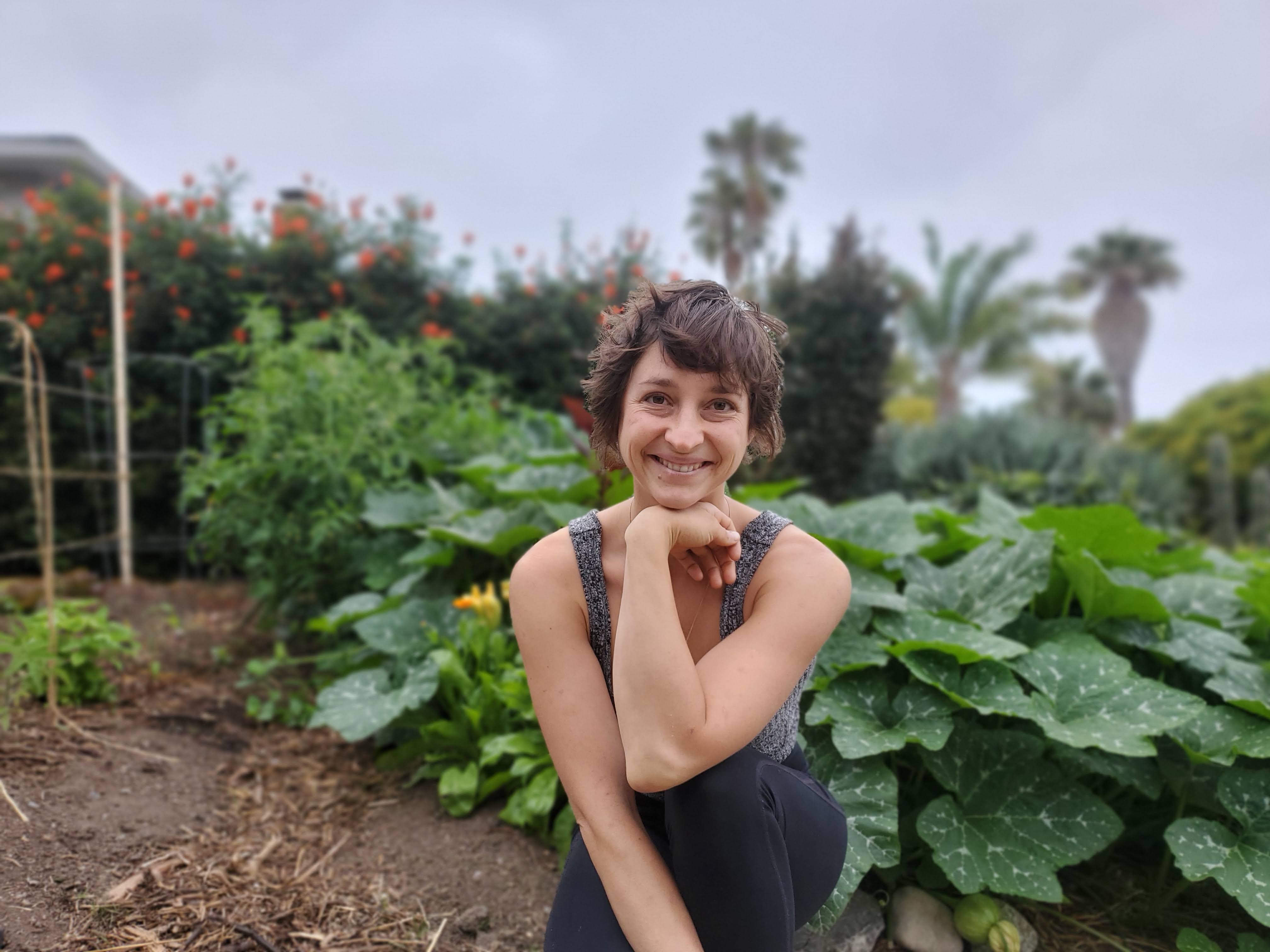
Co-Founder and Director of Marketing, PACHA
Maddie Hamann is the Co-Founder and Director of Marketing at PACHA Bread,
where she applies her extensive scientific background to drive the company’s
mission of promoting regenerative agriculture and sustainability. Maddie holds a
PhD from Scripps Institution of Oceanography, but she transitioned from the field
of Earth Science to marketing in order to make a direct impact on climate change
through business. Her dedication to environmental sustainability is at the heart of
PACHA’s marketing strategies, ensuring that the company’s values are reflected in
every aspect of the brand.