Has ESG lost its way — or just its courage?


 Apple Podcasts

 Spotify

 Youtube Music

 Amazon Music

 PocketCasts

 Castbox
Is ESG broken — or just leaderless? Lawyer-technologist Scott Lane, founder & CEO of Speeki, joins Sustainability Forward to argue the bottleneck is corporate courage, not cost or complexity. We cover boards’ ESG literacy, reframing the conversation around risk and resilience, compliance vs. true performance, customer-pulled sustainability, China’s scale, and how AI/agentic automation will reshape decisions. Scott’s advice to CEOs: have courage.
In today’s episode, Wrishi and Carmine sit down with Scott Lane (lawyer, technologist, and founder/CEO of Speeki) to unpack why ESG feels “stuck” — and how to get it moving again.
We discuss:
-
Crisis of leadership: why the missing ingredient is corporate courage
-
Boards & ESG: shifting the conversation to risk, resilience, duty of care
-
Reporting ≠ performance: ESG as a management system that happens to report
-
From green push to customer pull: building products people value (not paper-straw optics)
-
China’s renewable scale-up and lessons for global progress
-
AI & agentic automation: from “smart” to truly predictive decision-making
-
A CEO playbook: long-term thinking, listen to customers, stop being hostage to politics, and learn the new discipline
Scott Lane — lawyer & technologist with 25+ years in ESG risk; founder & CEO of Speeki (ESG reporting and management partner). Former founder of The Red Flag Group (acquired by LSEG).
0:08 Welcome to sustainability forward. I am Rishi from London and from somewhere between France and Switzerland is my Co host Carmen. How are you, Carmen? Oh, good, Rishi today in France, yes. So today we are diving into a topic that has become in a way controversial and of course very critical, and that's the future of ESG and corporate sustainability. The question we are trying to answer today is whether this ESG movement has lost its way a little bit, but more importantly, what are the solutions to bringing it back on track?
0:52 And this question feels very relevant in today's environment around the world. You know, we keep hearing news of government sort of backpedaling on climate commitments. ESG regulations seem to be tightening, and many companies seem to be quietly scaling back on some of the some of their ambitions. So we want to understand the situation better. So where does real ESG leadership come from today? And how do we restore the credibility to this ESG environment? Carmen, would you please welcome our guest? Yes, our guest today has a clearview on that. Scott Lane is a lawyer technologies with over 25 years of leadership on ESG risk is the founder and CEO of speaking, a full service ESG sustainability reporting and management partner to large corporates.
1:51 Scott began his career in law, specialized in corporate governance and anti corruption before founding the Red Flag Group in the 2006. He scaled to 300 employees and build partnership with some of the world's largest multinationals before selling the firm to the London Stock Exchange Group in 2020. Scott now leads speaking, I think companies moving beyond ESG rhetoric towards miserable trusted impact. So, Scott, welcome to Sustainability for Wedding. Thank you very much. Thanks for having me. So before we jump in, coming in the last episode, we we discussed the news item and that was the International Energy Agency's reports that while global investment in clean energy continues to rise, the US and parts of Europe are seeing sort of renewed reliance on fossil fuels. And meanwhile, regulations around the ESG disclosures are tightening across Europe and Asia. So today's episode feels very, very much connected to that, to that threat as well.
3:00 Yes, it's a perfect backdrop for our conversation because it alights exactly what Scott has called the crisis of leadership. Exactly. And that's kind of the first segment that we want to start with Scott. So Scott, it, it feels. Like that ESG is a little bit stuck today and we've heard you say in other platforms that sustainability is experiencing, you know, crisis of leadership. Could you explain what do you mean by that? Sure. I mean, firstly, I think ESG is stuck, but I think it can be very easily unstuck, to be honest. And I talk about the crisis of leadership because I truly believe that organisations have a purpose, they have a role in society, and that role is not only to extend value to their shareholders, but it's also their broader stakeholders. And that includes the planet, it's people, the communities they operate in.
4:06 So I'm a firm believer of that. And I'm a firm believer that the leaders of companies have that duty of care. They have a duty of care to protect their people, their companies, the environment, their communities, and they have this ongoing role to make their companies resilient. And by building resilient companies, they're able to deal with some of the challenges that they may present in the future, for example, climate change. So in my view right now, there's a lack of leadership, there's a lack of courage. There is a unfortunately there is a reactive approach to management and leadership and, and we're seeing that play out right now. So I, I think that to, to use your words, I think ESG is stuck.
4:55 But actually what I look at it at the moment is it's a little bit like a volume dial on a old style analogue device where you've got this dial that turns up and turns down. And in some circumstances, we're seeing that turned down right now. What I'm hoping is that some sensible leaders with courage can grab that remote control and can turn it back up again. Scott, do you think this is about weak intent or weak execution, both. So are companies saying that I think, but not not acting on this? I think it's a bunch of things, but actually the biggest thing, I think it's courage.
5:44 I think companies need corporate courage, and I think they're lacking in corporate courage right now. I think they're kowtowing to political pressure. They are kowtowing to pressure being applied to them by some limited stakeholders. I think that they're really lacking corporate culture to to be that change agent and to drive things forward. So I think it's a lack of courage. I think it is a fear in operating an uncertain environment. I don't think that it's because it's too complex or it's too difficult or it's too expensive. I, I don't see any of those things actually at all. I think it's just corporate courage. I think it's leaders that right now they are unable to see the wood from the trees, they're unable to see a clear path. And so in those circumstances, they'll do very little and if anything, they'll turn backwards and that's a real disappointment.
6:48 So, Scott, would it be fair to say that the reason why companies are lacking courage today is because ESG, the topic became too political or they did not see any benefits coming out of ESG. Would that be fair to conclude is now because you know, if there is a financial gain at the end of an activity, companies are, you'll see many companies being courageous with ESG. Has the opposite happened? Well, firstly, I think that yes, you know, we all hope that by operating companies that are strong on sustainability and strong on ESG practices, we obviously expect that that has a positive impact on the business and that positive impact both on the shareholder returns, but also on stakeholders.
7:37 The the issue is that that positive impact often takes a little bit longer than what a classic investment might be. And secondly, not only does it take longer, but sometimes it's hard to measure because we're making a longer term decision and we are investing for the long term and we don't always have clarity around the technology that's going to actually get us there. And so in many cases, we're setting lofty aims and goals without a clear path. Now, you know, we have done that in the world, you know, putting a man on the moon. We've done that in numerous situations. And this is no different.
8:18 We are going to have to have the courage in our convictions and we're going to keep pushing forward even when we're not exactly clear on what the path is going to be. But that requires that courage. And so I think companies are seriously lacking in having that courage. And it again, it's not because they think that it's too expensive or because they're kowtowing to potential political issues. I, I don't think it's that. I think it's that they're they don't understand the science and they don't understand how to walk in an environment where you're truly a leader. You know, most leaders are in these situations where they don't see a path forward.
9:02 That's what a leader is. A whole point of leadership is to be that person or that group or that forum that looks into the future, that looks not at the foot in front of you, but looks 10 miles ahead. And we don't always have clarity what's around that corner, but we know we've got the skills, we've got the teams, we've got the experience and we can lead through those challenging times even though we don't know what's around that corner. That's what leadership is. So I, I don't put it down to politics. I just put it down to poor leadership, poor goals, poor direction, lack of spine, a lack of courage. I put it down to ignorance in many cases.
9:46 Interesting. And you just remind me of we talk about the tragedy of the horizon, what market Mark Carney said a few years ago explaining the misalignment between the short term kind of thinking of leadership in companies or leading countries versus a problem that takes years to be solved as the climate change and probably there is that the kind of same misalignment you were talking about? There is, there is, there is a clear misalignment right now between the short term thinking and the short term reward system that both stock exchanges impose. But also you know what we need long term to fix the global problem. So, so there is definitely a short term versus long term issue.
10:31 But but I would say that I think companies still have to think medium and long term. I mean, even if you're a company dealing with its own market and you're ignoring issues like climate change or sustainability for a moment, companies still have to have a medium to long term solution. I mean, you're not running a company for three to five years. You're just not. You're running a company for 15203050. You're running a company for generations. That's what you're running a company for now, unless there are certain situations where you know that you're undertaking some sort of change in a short period of time or you've got some sort of limit on your, on your operating license, for example, that might be different. But but a normal company has to look 1015, twenty, 30-40 years in the future just has to that's how companies have always operated.
11:19 So to think that, you know, that is we, we play the same issue here with sustainability. That's also a 10/20/30 forty year horizon just like it is when you buy a building. You know, when you buy a building you're looking at A203040 year mortgage, you're looking at loan periods which can be 2020, thirty years and there's no difference. I mean, we always have looked long term in running businesses and we should do so with sustainability there. There's no difference in the thinking. The difference is there's an element of absurd in that we don't exactly know what is going to happen in that 20th or 26th year. We don't exactly know.
12:00 And I say, well, that's OK because that is our job. Things are not going to happen overnight. We're not going to wake up one day and say, oh, wow, you know the sky is black. What just happened. That is not going to happen. And so we know that we've got 10/15/20 years worth of trending with the observations, with the data. We've got all the data in the world available to us right now. We can predict that data. We've got AI to help us see that data. There is absolutely no excuse but not being able to see, expect or predict what might be around that corner. So you have argued that businesses say you put a lot of emphasis on businesses to lead this, not governments.
12:46 What do you believe that? Yeah. Well, show me a government in the world that is actually doing pretty well at the moment, that is actually leading its purpose. So I, I have absolutely 0 faith in governments to fix this issue. Absolutely 0. The only government that I have faith in is actually the Chinese government. I think the Chinese government with its structure and its power and its wealth and its ability to drive change, which we have seen in sustainability, that's the only government I think that can actually make significant headway. And it is, and it has been. It looks like it will continue to. So we all have China to look at as our guide and potentially as our saviour. But back to your question, absent China, I don't see any other country that's truly striving. Europe has definitely taken some great strengths. They've had a few wobbles recently that being impacted and the patch of wobbling and we'll see where that comes through. But no, I don't have a huge faith in government. I see that governments are in most cases highly unusual animals.
13:50 They're unpredictable animals. They are politically charged animals. They are animals that are, I don't think we can necessarily rely on for long term and that applies in most cases. So that being said, companies can operate in a different spectrum and can operate longer term. And I think that's why I put a lot of faith in in companies to to drive this change. I think they're more fast, I think they're faster, they're more agile, they're nimble. You know, they've got the ability, the skill sets that people have in companies are so much stronger than what we have in government. I mean, you know, I keep looking at some of the, you know, Senate inquiries in the United States when they start talking about complex, relatively complex issues like AI or technology or even the Internet and see some of the, you know, the head banging responses that these elected officials have.
14:43 And and these are the people that we're expecting to predict the future and run out around our society and the planet going forward. Embarrassing. So the answer is the answer has to be on companies. It's the it's the only solution. Yeah. Absolutely. I was just reading somewhere yesterday that the amount of solar added by China in six months is more than the total solar added by the United States. Absolutely correct. That is a correct step. In fact, I think it might even be more than that. I think it it might not just be the United States, might be the entire world. So the answer is yes, it's absolutely. Look, without China's work in the last few years, look, our numbers globally would look very, very different.
15:28 You know, we would be seeing an increase in global emissions. But right now we're flatlining. And that flatline is purely on the basis of China. So, you know, China has has done a an extraordinary job. They've got an extraordinary job to do in the future, but they're making some great headway. You know, you know, I think, you know, we should really learn from China, not, not try and distance ourselves, but we should be collaborating and learning how it's being done so that we can consider that elsewhere in the world. Yeah. Now Scott, certainly the role of companies as you say is, is very important. My question is specifically about the role of boards, right.
16:12 What's your view on typically how well they understand ESG and what are their responsibilities in this domain? Yeah. So first question is really easy to answer. I think the average knowledge of a board member when it comes to ESG and sustainability is extremely low. I think it is. I would if I, you know, if that classic one to five scale, I think it's A1 or A2, I think it's very, very low. You know, I was at an event recently with thousands of board directors and ESG and sustainability. I think I heard it mentioned once in four days now I heard AI mentioned every third word, but ESG and sustainability is mentioned once. And, and really that surprised me. But people really had very little time for it. They had very little understanding of it. And, and so it was, you know, these are relatively new concepts that have been brought in. And I think we haven't allowed our board members to really learn and grow and experience what ESG and sustainability is. And I think it's kind of just flown by them and, and they just haven't been able to catch up.
17:20 Now, when I, when I talk to boards, I tend not to use the ESG and sustainability words to go. I, I, I try to avoid those words, firstly because there is, there's a little bit of toxicity as we discussed at the start, but also because I have to put it in language that I understand now, a board member, one of their primary roles is to exercise that duty of care and they exercise that duty of care for the benefit of the shareholders and they're building strategy for an organization in the long term. So long term return for shareholders and I would say stakeholder. So their duty of care extends into the future. Now boards are very good at understanding that duty of care. They're very good at understanding risk. They're good at risk.
18:01 They get risk. Their job is to manage risk. So when we talk about ESU sustainability topics, what I do is I talk to them about risk and I, I don't talk about sustainability. I say, listen, we have to build a business that has resilience. We have to build a business that is going to exist in three, five, 1020 years. So we need to look at all those areas of risk that we need to manage and manage effectively. Now there's some of those areas of risk that we might actually be able to turn into a positive, meaning an opportunity. So there are some negative, lots of negatives, but there are some positives too. So I talked to them in that concept of risk and I talked to them in that concept of resiliency.
18:42 And I tell I talk to them in the context of exercising their duty of care and doing that. So to give you an example, I don't talk to them about ESG and sustainability. What I talk to them about is capitalizing on market trends, trends that individuals might see in the way they do business, in the way they commute, the way that they use energy, the way that they might, for example, travel. So products services, I talked to them about, look, we don't want the risk of a bribery corruption issue happening on our watch. We don't want the risk of a health and safety issue, a building collapsing. We don't want the risk of our major manufacturing plant being underwater 3 * a year because of floods.
19:24 We don't want the risk of a community which houses 90% of our employees being wiped out due to forest fires. We don't want the risk of a water or a pollution event because of a malfunction polluting our local environment. So I talked to them about risk and resiliency, and they tend to operate better in that environment. It's when we start talking about sustainability that the eyes start glising over. They start, you know, thinking about, you know, visions of activists hugging them trees and locking themselves in front of forests. And all that stuff is old school, old thinking. But that's where they're at. And so I need to play with what I have in front of me. And unfortunately in most boards I have an age group that's 65 and above, I have a majority of male via majority of males. And in most situations I have a via majority of white males. Highly educated, towards the end of their careers, made significant amounts of money and probably not looking for the next 50 years as to how they can build businesses. So very short term thinking from their own personal perspectives. And so I need to talk to them in language to understand risk, resiliency, duty of care.
20:41 Interesting. So a lot of companies may have these ESG programs, but very few can show real performance. What can we move? How they can move from compliance ESG so ticking the box to something that is credible and other driven. Yeah. I mean, it's part of the trend, isn't it? And part of the challenge of this is the laws. The laws forced everyone to report. And so the laws came out and said you guys need to report, you need to tell us all this information and you need to publish it now. And what happened was everyone went into compliance mode. There's law. Therefore we need to respond and we need to report.
21:22 And so that is actually the problem. To be honest, what we should have done is we should have coached and encouraged companies to drive different behaviours, Dr. different cultures to take steps along this path without a strict focus on producing a report by this date in this format, with this, you know, XBRL tagging in order to go into this database that likely no one will ever read. So unfortunately we are, we're looking at this reverse engineered right now. We're focusing on the reporting and we're not focusing on substantive. So unfortunately, we are where we are. And so all I can say right now is look to companies is do the reporting, tick that box, get it out.
22:03 But now let's go back and work on some of these substantive issues. And we need to do that in tandem. And there's no excuse for it. This is not a reporting exercise. This is a management system exercise that happens to do reporting. So I think that will get fixed in the next few years. But right now unfortunately the way the legislation was drafted, although it is changing in some areas, there is an owner, some compliance and reporting and disclosure, which is the wrong end of the stick. But it is what we have. So we need to deal with it and reverse engineering. Now I am curious, Scott, did the history of financial reporting also evolve in a similar way or I don't know if someone has done this historical comparison, you know? There is some historical comparison. The issue about financial reporting is it took us about 50 or 60 years to.
22:56 Get we don't have. Time, it took us 50 or 60 years to get IFRS agreed around the world. I mean that that was a very, very long process and it and it's still not super sticky. So that that was a huge process that happened. So right now we're doing this in the space of years, frankly, you know, you know, probably 5 to 10 years, but actually in some sense even less than that. So look, we are absolutely jamming this thing in and we are pushing it into the business environment. And you know, look, it's not the why, it's not how I would have done it. But I think, yeah, we're time has not been on our side and that's because we have a crisis that we need to deal with. But I think perhaps there was some over exuberance in this area on on regulations and I think that hasn't helped as well.
23:52 So yes, financial reporting took 50 years, non financial reporting has taken 5. Now in your experience from your work at speaking or before, have you seen any so great examples of companies doing this? Well, if you can disclose names, very good, but if not, you know, just some anonymized examples would also be good for our audience. Sure. I mean, I I try not to talk too much about names, firstly because there's always two sides to a coin unfortunately. So while someone might be doing something fantastic that can flip very, very quickly.
24:32 But look, what I can say is that, you know, I part of the speaky work that we do is we audit companies. So we audit non financial statements and we audit sustainability statements. We give we certify companies against ISO standards, So for example, so whether it's a corruption standard or another standard. And so, you know, we are assessing companies, we are interviewing CE OS, we are interviewing the whole management team, not only just in headquarters, but in many cases around the world. So a recent project that I did that was purely on bribery. So it was a purely anti bribery issue. You know, I interviewed 400 people to assess them and to look at their culture and to assess with their understanding and to challenge the way they think. The challenge their understanding of the of the law and the systems.
25:20 Challenge them on their policies and their procedures and their risk assessments and their monitoring and their measuring and the tools they use and the technology they use and the skills that they've developed and the the culture. Now if I can sit down, which I did recently with the CEO for five hour discussion, five hours it went on where we talked about building culture. We talked about how to engage employees as part of the solution. We talked to them about how to change behaviours. We talked about how to build policies and procedures that are that are descriptive, not prescriptive. You know, so that it's not yes, no do don'ts, but it's more it's cultural, it's values driven. Now that's a company that I think is gonna go places. That's a company that I think has got great leadership. The CEO is thinking their management team is consistent. It's been driven throughout the organization. There's a consistent messaging.
26:17 There's a consistent culture. There's a, you know, there's a value system that goes to that organization and it's something that people buy in and you can feel it when you walk into the organization and you can feel the passion that they've got for doing the right thing, for not cheating, for not being corrupt, for not winning business inappropriately. You know, it's, it's a, it's a, it's a thing, it's a feeling in this company. So whether it's a corruption issue, it's a carbon issue, it's an energy management, when you get inside these companies, you can feel it and it's, it's not rubbish, You know, it's not total BS. They're not just telling the order to a whole bunch of crap.
26:58 You know, I'm smart enough to work through all that. You know, I, you can tell when it's strong. And so, yeah, look, there are companies that are out there doing it and doing it really well. But they're the ones that have passion, belief, they have a value system. They don't compromise those values. They take it seriously. They push it through the organization. They challenge people to think differently. They drive different behaviours, they work descriptively, not proscriptively. They're the companies that get it. So that to me is what we need. It's purpose driven, it's values driven, It is an organization that buys in and goes for it. Now, whether it's on AG topic or an E topic or an S topic or the whole thing, that's when I see it working. Everything I've just said in the opposite one of those companies that are just doing it for, to ticket box or doing it for to push out a statement on the website and you know, as in order to, you know, we can smell that a mile away. You know, you can get into the first meeting, you can tell straight away.
28:04 You can look at their documents and tell straight away. It doesn't take very long to to get to the bottom of that question. So, so there are companies out there that are doing it, but I must say there's it's a, it's a short list, but it is getting, but it is getting bigger. And it's called Let's try to make an exercise, exercise looking at the future now, the future of ESG leadership. So when you look five years ahead, what do you think will define the next phase of ESG? Yeah. Good question. I, I think the biggest question actually comes down to products and services and, and let me explain that. I think what the world has done is, you know, what companies have done is they've said, look, we need to get on the sustainability thing.
28:51 So let's let's take our existing products and let's make a more sustainable version of it. So let's instead of using this particular bottle top, we're going to use that particular bottle top. Or instead of using this sort of plastic, we're going to use a slightly different sort of plastic call. So, you know, companies have looked at their customers and said, let's let's give them a new product with a portion of that product being more sustainable. And those companies should love it. Those companies, sorry, those customers should love it. They should be very happy that we are now providing them with a more eco friend fee or a more sustainable product. That's what's happened in the past. And I think that's a flawed model. I think that is absolutely flawed. You know, no one asked me whether I wanted a paper straw. I would have very comfortably told you that I did not want a paper straw.
29:42 Hyper straws are not effective. When I buy a straw or use a straw, I want a job to be done. I want to take a liquid and I want to reverse gravity and move that liquid upwards and it needs to be done. So over a long period of time, hyper straws don't set that purpose. So this was something that accompanies threw upon us as consumers the new world in five years time, hopefully maybe somewhat different. I'm hoping that companies can start to work out the fact that the customer is at the centre of sustainability, not them, not the company, not the company's purpose, not the company's opinion, not the company's sustainability pledges or net 0, whatever.
30:31 It's the customer and the customer is going to pull sustainability. So think about it, you've got a company that's pushing sustainable products or you've got a customer who is pulling sustainable products. We need to get at a customers pulling sustainability products. So instead of pushing a product to a customer that just happens to have some sort of sustainability label, which very few people care about, very even less people will pay money for over and above a non sustainable product. So we need to think about how we do pull rather than push. We need to be thinking about how consumers and customers drive the sustainability bargain, not companies.
31:14 So that is where I think it will go. So I think it will be more nuanced. I think it will be more intelligent. I think it will be more customer driven. I think it will be more companies listening to customers and giving them solutions that the customer sees value in and the customer has a willingness to pay, which is higher than what they would have previously. Saffron will start to get sustainability moving. But if we keep trying to make a buyer product or a green product or make it, you know, a slightly different packaging and we shop that to a customer and of course we make them pay more for it or even the same, but we label it as customer. We try and make people feel good because they're buying a sustainable product.
31:58 I think that is just silliness. I don't think that's going anywhere. I don't think it's ever going to go anywhere. And I think we've seen that it just doesn't work. You know, there's a people are buying products because they want a job to be done and they want a functional role to play. And when that functional role includes A sustainability piece, and it's sustainability isn't an add on, but it's part of that function and it adds value. People can see that value, they can articulate that value and they're prepared to pay for that value. Sam, I think we've got action. So that's where I think we'll go in the next 5 years. I think we'll see a very much customer driven as opposed to companies pushing.
32:40 I think we'll see customers always. Now, Scott, the the word that we haven't uttered so far in this podcast is AI, right? So as we are looking into the future in this segment, one of the things that we, you know, wonder about is whether AI and automation will make ESG more transparent, more effective, or will it end up blurring the accountability even further. What's your take on that? My take is this actually the same take across all areas of business, which is AI is an extraordinarily development in technology, both generative AI and more importantly I think a gentic AI, the ability for agents and combined with that some form of automation of robotics and adding in potentially one day a lot more of AI intelligence, human like intelligence. I think those things together are going to be the foundation of business in the next 10 years. And so sustainability is going to be impacted by that just like every other part of the business. And so whether that is applied in circumstances in reporting, for example, it could easily be in developing programs, potentially developing new technologies to measure and monitor definitely in order to
34:10 adjust the electronics usage or perhaps to adjust temperatures or to adjust our emissions or to adjust energy usage or to adjust and be more variable and to do things in the moment. I think AI willpower all of those things and they're all fantastic advances that right now, you know, we're live, right? We are relying on analogue type devices. You know, yes, no actions, very simplistic, you know, not particularly smart. AI can give us that intelligence. And so, you know, whether it's a smart thermostat on the wall, you know, we used to call thermostats on the wall smart because they were able to be accessed by Wi-Fi.
34:51 I think the answer is that that's still pretty dumb when it comes to the world of AI. The world of AI will make that smart thermostat into an extremely bright predictive thermostat. That's what AI will do. So we need to move beyond thinking things are smart because they're Wi-Fi connected and turning things into what AI, which will change that role of the thermostat 50 times what it's more powerful than it does now. And that's when I think AI will really impact. And so that will be right across the whole world, right across all of our businesses. And frankly, we need to jump on board and get used to it and get comfortable with it. My team is vibe coding. I'm vibe coding, You know, we're all developing agents. We're all working on things in the sustainability field. And the answer is associate everyone else. And now just to close, Scott, so if you can give one piece of advice to ACEO, who wants to lead with integrity and what that would be?
35:49 Courage. Have some courage. Have a value system, a belief system for your organization and have some courage. You know, stop thinking short term. Start thinking medium to long. I would encourage them to really listen to their customers and find out what their customer wants. Rather than pushing. I'd, I'd look at that pool. I would tell them not to be swayed by some political actions. And what I'd also say is stop. You know, firstly, I'd also say on that one, I'd also say stop being hostage, held hostage by laws and politicians. Stop being held a hostage. You know, they're making you hostage right now. You're at the hostage of what the law says. You're at the hostage of what the regulations say. You're at the hostage of what the law or the customer of the government tells you.
36:37 You don't have to be held hostage. There is no way you should be held hostage. You should be developing your strategy for your organization, which includes A sustainability strategy. You should be doing that. You don't have to be held hostage by anyone. You're that secure base that you have in your organization and you need to be be that against your peers and against your organizations that you work with. You're the secure base leader and you need to drive that dialogue. And you did not be held hostage to a politician. You do not be held hostage to a government or a reporting agency or a standard. You drive it where you need to drive it. That's what I would say in in order to do that, what I'd say to that CEO is you need to go back to school. You need to go back to school and need to learn because these issues of ESD and sustainability are not things that you studied at university.
37:25 They did not appear on your MBA list. They did not appear in your school list or your sales or law degree, whatever it was, they were not there. So the chances are you do not have sufficient knowledge, you do not have a broad understanding of these topics and how to influence and drive behaviour and how to lead and courage. So you need to go back to school and you need to get those because the world has changed. Sustainability and AI, digital transformations are going to change the way we operate. Going to a two day conference or reading a book is not enough. That CEO needs to go and learn a whole new way of thinking. And hopefully the more that CEOs will do that, the more that they will get that intellectual courage, the more that they will start to be true leaders when we start to come and fix these issues that we've got.
38:12 All right. I take away from that was courage Scott Lane, CEO and Founder of Speake. Scott, thanks so much for joining us on Sustainability for Today. You're welcome guys, and thank you very much. And yes, if I would lead or finalize with one thing, I would say you're right. It is absolutely courageous. It's, it's, it is something that we need more of courage and great leadership. That's what we need to fix these problems. Absolutely. And to our listeners, if you enjoyed this episode, follow us on LinkedIn, go to our website, sustainabilityforward.com, and subscribe to our podcast wherever you get your podcast for more conversations on the business of sustainability. This is your host, Rishi, signing off. Carmen, thanks for joining me on this episode. Thank you, Rishi, and thank you, Scott. Great discussion.
39:05 Take care, bye.
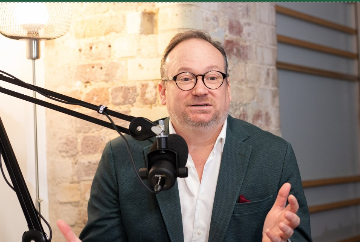
Founder & CEO, Speeki
Scott Lane is a lawyer and technologist with over 25 years of leadership on ESG risk. He's the founder & CEO of Speeki, a full-service ESG and sustainability reporting and management partner to large corporates. He began his career in law, specialising in corporate governance and anti-corruption, before founding risk & compliance firm The Red Flag Group in 2006. Lane rapidly scaled RFG to 300 employees, establishing the firm as a leading expert in risk and compliance and building partnerships with many of the world’s largest multinationals, before selling it to the London Stock Exchange Group in 2020.