Mobilizing Trillions How Capital Markets Can Deliver Real Climate Impact


 Apple Podcasts

 Spotify

 Youtube Music

 Amazon Music

 PocketCasts

 Castbox
How can we move the machinery of global finance fast enough to meet the urgency of the climate crisis?
In this episode of Sustainability Forward, hosts Wrishi Sutradhar and Carmine Fiume sit down with Steven Rothstein, Chief Program Officer at Ceres and the founding Managing Director of the Ceres Accelerator for Sustainable Capital Markets. With over four decades of experience spanning nonprofits, government, and finance, Steven shares what it really takes to turn investor intentions into measurable sustainability outcomes.
From fiduciary duty and climate disclosure to risk, regulation, and the next wave of innovation — we unpack the playbook for mobilizing capital markets to deliver real-world climate results.
🎙️ Topics include:
-
Why climate risk is financial risk
-
The next frontier for investor action
-
The hidden role of water, insurance, and heavy industries
-
How credible disclosure can cut through greenwashing
-
What gives Steven hope for the future
📍 Visit www.sustainabilityforward.com for more stories and insights.
Available on all major podcast platforms.
0:09 Welcome back to Sustainability Forward. I am Rishi your host and with me is my Co host Carmen. Hi, Carmen, How are you? Good Rishi, nice to be back. Nice to be back today, Carmen. We are asking a big question and the question is how do you move the machinery of capital markets to deliver real world climate results and deliver these results fast from investor stewardship and disclosure to nature and biodiversity? We are today digging into what what actually works, where regulation helps or hinders, and how we measure impact. Beyond the glossy pledges of which you've seen many, our guest today has spent decades turning good intentions into practical change across nonprofits, government, and finance.
1:00 So if you care about credibility, not greenwashing, this episode is for you. Carmen, would you please introduce our guests? Yes, with great pleasure, Rishi. I'm looking forward to this episode. So today guest is Steven Rosten is the Chief Program Officer at Ceres and the founding Managing Director of the Ceres Accelerator for sustainable capital markets. He brings 40 years plus of leading mission driven enterprises and now he guides Ceres program strategy to mobilize capital markets for climate sustainability.
1:40 Steven has launched and LED organization across sectors including Citizen Energy Corporation, Environmental Futures, Perkins School for the Blind, Citizen Schools, the JFK Library Foundation and Constellations New England Electricity Brokerage. He has worked at local, state, federal and international levels, serves on numerous boards, and he's a frequent speaker and writer. Stephen Holes, ABA, with honors in political science from Williams College and an MBA from Northwestern Universities Stanbour School of Management. So, Stephen, welcome to the show. Thank you so much.
2:24 I appreciate that kind introduction. So Steve, we want to start with a with a background about your own career in sustainability. What brought you to where you are today and kind of during this journey, what kind of aha moments have you had as it relates to sustainability? That I've had a number of cases where seeing people who have taken on a big job, a big area and made an impact work on some of the early folks with electric vehicles, with recycling when Earth Day was starting. And what is clear is folks in my generation have really made a lot of mistakes that we've LED down the road where we're utilizing too many resources so that our children and grandchildren.
3:22 And I think of this very concretely. I have a grant, 2 1/2 year old granddaughter named Macy. What Macy's life is going to be like. And so I am an incurable optimist despite a lot of the challenges, because I have seen many people who have been effective in making change and bending the curve of our emissions, of our sustainability, use of water, biodiversity. And it's quite interesting what you said. So a lot of mistakes. So an optimistic would say a lot of mistakes equals a lot of experience and that we should bring with us, right. And that's a little bit more about Saras for people to know this company, what's the mission, why it matters today and what you're doing there as a Chief Program officer.
4:16 Yes. So series we've been around for about 30-7 years and we started with investors, large capital investors. So our investor network a few 100 investors collectively about $40 trillion of assets. So big asset managers, asset owners, and they fundamentally believe that if the companies they invest in think about climate risk and climate opportunities, they're going to make more money. It's very simple. They look at this from a fiduciary duty perspective. This is not like, oh, they're trying to trying to invest their money. And then the side, oh, there's that little thing called the environment. We'll think about that. This is core to the risks and the opportunities for these companies. Our world's going through a dramatic change from clean energy and use of new products and, and we which we can talk about and series. Our members and the folks who work with large investors, large companies, policy makers at the state, national and international level all believe fundamentally that climate risk is financial risk.
5:16 And that if you understand that risk, you'll do better from a fiduciary perspective. And we'll also do better from a planet's perspective. And that we work on a variety of programs from steel and electricity and oil and gas and nature, biodiversity, water, financial, financial sector, banks, insurance. And I work with the amazing teams on those various programs. Now, Steve, one of the questions I had around series is, is it essentially kind of bringing more relevant information to the investment community?
5:56 Is it building tools tactically? What are the things it is doing for for its membership body? Absolutely, Yeah. So, so we generate a lot of thought leadership meetings, reports, webinars, articles. So for example, we just did a report recently on water and data centers, and data centers use an enormous amount of water. And this highlighted some case studies. So if you're an investor or if you're a company using a data center, if you're an investor going to invest in a company that's going to be building data centers, you should be asking these questions, not just because there is water risk. And in the United States, 1/3 of the data centers are being built in areas where there's not enough water anyway. But it'll mean farmers don't do their work. Housing gets stopped.
6:44 So it affects communities it affects. That means they'll be permitting and citing issues because of local politics. So that's just one of literally hundreds of examples I could give from insurance and steel and, and, and across the board sectors. So we provide information for investors and then they make their own decisions. And the other thing is we bring them together and they learn from each other. So we have a working group. If you're a group of investors and you care about a certain topic, you can talk to other investors about that topic and just learn from each other. So again, we represent hundreds of investors. They all think differently. Some are more impact investors, some are more mainstream investors, but they all understand that climate risk is financial risk.
7:33 And Stephen, you mentioned a word that I, I like and not I like it in terms of clarity that is risk. Now we are an environment living in environment where it looks like talking about the problem around climate is quite controversial, has becoming quite controversial. He's also talking about risk controversial today. Or we are all aligned that there is a risk and we need to do something out of it and that is better that we do something out of it because otherwise we will see the negative effort about it. Yeah. So we don't get into a political, we're a non partisan organization. We work with people in all political parties at the state and national level and including on our board and things like that.
8:24 And we don't get into a debate about the philosophy of it or any of that. It's just we look at the, the, the business issues, you know, if you're a, I'll give you an example, if you're a company that in the United States that gets something through the Panama Canal, the Panama Canals had a drought that means 40% less ships have gone through recently. So if you're planning for some widget to come through the Panama Canal, 40% chance it's going to be late. That's a business risk. Or another example, I talked to a company in Southern California where there's not enough water. They got a big order for to build a piece of equipment and they couldn't get a building permit because they couldn't get a water permit.
9:12 So that means that it turned down that order. That's 10s of millions of dollars. That's not, we don't, we're not debating the philosophy of it. That's a business risk. So we focus on the fiduciary duty, the safety and soundness of these financial institutions and businesses. And we also understand that there's an enormous opportunity for growth. Last year, 94% of the energy added to the grid in the United States was renewable. That was not, not, that's not because of politics, that's because it's the lowest cost. Clean energy is low cost energy. Let me say that again, clean energy is low cost energy. So if someone, if one of your listeners says all I care about is just I want low cost energy and I wanted to come online in the next year or two, that leads to renewable energy. So we think very much about it from a business perspective. And the last quick point is one of the things that's growing and growing interest is resiliency that because of the floods and fires and and other physical risks that there is broad consensus across all political perspective that we need more resiliency more in addition to the decarbonization. And I think, Steve, we've already, we've already gone into the meat of the discussion which is what you know, what are the drivers or levers to shift capital towards sustainable investment.
10:36 And like you highlighted, it's good business sense to invest sustainably. Are there any other levers that that we should think of as we as kind of the capital shifts to our sustainable investments? Well, there are this both protecting against the risk and seeking the opportunity. So protecting against the risk is the fires, floods, tornadoes and other things. And you know, in the United States in the 80s we had $1 billion storm every three months, 1980s three months. Last year it was every 13 days. And those storms are growing. The most expensive event that we've had in the history of the United States has been the LA fire last January, $250 billion. So that again there is if you're thinking about whether it's a big business or a local dry.
11:27 I was, I was touring the burnt out areas where a person's home is built. And I asked him is he going to rebuild? He said, well, it's not just his home, his kids school was burnt, their church was burnt, their whole community was burnt. So, so in that community in LA after the fire, millions of dollars of municipal bonds were downgraded because they weren't sure if they'd get paid back. So there's a lot of ripples on the risk people. If they can't get insurance, they can't get a mortgage. So it affects housing, it affects many other things. So there's a risk side, but then there's also the opportunity side. According to the UN, we're spending around $2 trillion. The world's spending around $2 trillion now on new and emerging technologies.
12:08 That number's going to grow to around 4 trillion. So that means if you're a business, there's lots of opportunities. There's a risk of if you're a spark plug maker, EVs don't have spark plugs, so you're not going to sell more of those. We are going to sell more batteries. So there's both the risk side and the opportunity side on the business side, but also if you think about what do your customers want, they're poll after poll after poll that consumers want sustainable products, younger people even at a higher percentage than than than older individuals. So if you want to sell more and again, you can't greenwash, but if you want to legitimately say what you're doing has to be based in fact, there's a customer interest there as well. But there's also regulatory risks and and legal risks. And this really triggers innovation, innovation, technical innovation from business point of view. Steven, can you talk about the success stories of real change that you experienced with your work? Sure.
13:13 There are, you know, hundreds or thousands from steel makers that are making low emission steel now or low emission concrete that have the same properties and are pretty close to the same price to, as I say, renewable energy or 94% of the energy added to the grid in the United States was renewable last year. So all kinds, we, the world's using more renewable than coal for the first time ever. So there are all kinds of products. I'll take another example. I just met with a company that takes chopsticks literally. Think of those pieces of wood that you use for maybe 30 minutes when you're eating and then, well, she makes them into furniture now. So kind of a circular economy.
14:02 There are States and countries that are requiring disclosure. So there's 37 countries, plus the state of California, which if it were its own country would be the 4th largest economy in the world, are now requiring corporate climate disclosure. So there are hundreds of innovative technologies from thinking about aviation fuels and marine to EVs to water protection, to biodiversity and nature, to insurance policies. And again, there are hundreds and hundreds of examples. And that's great, but it's not fast enough. Literally, our world can't wait. We can't wait.
14:42 And so we need more companies, more and more public officials and more investors to look at these risks and look at them yesterday. Great. Let's let's look a little bit into a crystal ball. Let's see, looking at time horizon of 5-10 years from now, what you think would be the top trend shaping the capital market? What's your view? Well, there are many other trends shaping capital markets outside of climate from, you know, AI obviously have an enormous impact on how we do our work, employment, all kinds of other things. Population, there are studies show that the world's population is going to level off and start to decline. Education, I mean, there are a lot of politics, the role of various countries, obviously what US is doing and that affects the role of Europe and China. So the many other factors that I'm I I wouldn't consider myself an expert on, but in terms of climate and sustainability is I think that we're going to look back and see that sustainable products, whether it be energy use to automobiles, to consumer products, they're much more in the mainstream 510 years from now than they are today.
16:01 We're going to look back and say, it's amazing that there was this debate about is climate change real or not? We're going to the next generation is going to assume things, you know, in terms of the use of this. AI will use a lot of energy, but also will help us solve problems, whether it be in medicine or in climate that we haven't been able to address before. Series just did a big report. Looking at it helps using AI to help understand data. So that's why I am an incurable optimist and think that the future will be brighter, whether it's brighter fast enough. But there'll also be a lot of pain, just as we've seen already.
16:43 You know, last year half a million people died around the world because of extreme heat. Half a million people. And so we have to address these issues rapidly, thoughtfully and and across borders. You know, see, one of the questions that we get in many of our discussions, sometimes from our listeners as well, is in the world of sustainable investing, how do we distinguish credible action from greenwashing? And is there any work that Sirius has done in this area? Absolutely. You need to have a common set of definitions. If, for example, in the United States and many other countries, they require an audited financial statement for a public company.
17:29 And so that means everyone does the same format. You have a balance sheet, you have an income statement, and then people can believe in that basic information. Well, when that was put in place decades ago, that was very controversial. People are saying, oh, you can't have that, it's too complicated, we'll be sharing competitive secrets, etcetera. That's what we need here. We need to have consistent information. So management you can't manage what you can't measure. So the fact that 37 countries are either have approved or in the process of approving consistent form of corporate climate disclosure is a big step. And Syria's been very active in that. We help to draft the rule. The sorry, the law in California that's now going to it's been passed is now going to the regulatory process. So first is climate disclosure is critical. Second thing is you need transition plans. If you say to a company, you're here today, we're going to be in five, 1020 years to reduce your emissions, which is again, think about that.
18:27 It's reducing your risk and what are you going to do to increase your opportunities. So you need to have that and they need to be public and they need to have a consistent benchmark. So what we don't need is a climate tower Babble. There's lots of people saying climate things, but they're using different terms and methodologies and that can lead to greenwashing and we've seen lots of examples of that. So we need to have this basic understanding. That's why I am excited these 37 countries moving forward. Now, those 37 countries, when you put them together, that represents over 60% of the world's GDP, so that it will send a clear message to the economies and that and then in addition is California, which will add to that. So that's we're getting more information. Investors want it, customers want it, employees want it, boards want it.
19:18 And so we think that that's a reason for hope. But companies also have to be very careful that they're not overstating. They can't, you know, in any field, whether it be climate or anything else, they have to be. They can market what they're doing, but they shouldn't over market it. They shouldn't promise what they haven't be able to deliver. So that that brings us kind of to the question of what is the role of policy and regulation in all of this, right. And in your view, Steve, where do you see a regulation as being the most critical when it comes to sustainable investing? Yeah, so the writer HL Mencken once said this is not his exact quote.
20:03 But for every complex problem is a simple answer that's always wrong. So solving this is complicated and we need everyone at the table. So policymakers and regulators are have to be there. And in, you know, what we've seen is in countries where policy makers and regulators are moving forward, they're they're, they're, they're coming up with solutions faster. In some other countries, you know, where there's a debate about is climate change real or a hoax? It's going to slow things down. So we fundamentally believe in the economy series believes in in the free market, as long as it's good information. But that's to be good, consistent, clear information. But they're also areas that you know, when you, when society knows, I'll take methane for example. Methane is very toxic.
20:50 It's around 10 times the emissions impact than CO2. And we have to regulate that and we have to reduce methane. A lot is being done by private sector and we're now actually working with oil companies, we're working with farms to reduce and others to reduce methane, but more needs to be done. So it's a partnership between the public and the private sector. We fundamentally believe in the in the market and investors, but they can't do it alone. It's too big of an issue. And we recently also recorded an episode we charged on maintain and transparency and and these problems. So we are we are aligned with that. And Steven, one question here on there is any aspect on this topic that we are currently not investigating enough or not working enough something that is under looked in this topic?
21:51 There are many areas, I'll just give you 3 quick examples, The insurance industry. People think when they think of insurance, they think of it as kind of a dull industry. Well, the insurance is in the middle of all, whether you're looking at the opportunities for clean energy, wind or solar or bio fuel fuels or geothermal or others, or just people getting a mortgage. And you know, whether it be, you know, any, anyone in any in, in countries where they in the United States, if you can't get insurance, you can't get a mortgage. And so that's affect housing. It's a particular risk for friends and neighbors that are more marginalized and living on the edge financially.
22:32 So the insurance industry and there's a lot of great solutions. There's some critical innovative in innovators in this area. So insurance is 1. The second is water risk that we do not have enough water at the way we're using it now. And water isn't in the right places. There's some places where there's too much floods, you know, and, and last year in Bangladesh, I think the number was 30 million people. But I might be off a little bit. You know, we're forced to move because of floods. So water risk and there are many areas where there's droughts and that's those numbers are growing. And particularly things like data centers grow. That's going to take the amount. There's a data center complex being built one place in the United States now that will take as much water as the entire city of New Orleans. And so that's going to put enormous risk on aquifers. So we need to think about water stewardship in in in more thoughtful way.
23:28 And then the other area is Heavy Industries that people think, oh, you can't do anything about that. Well, there's are, there's so many creative approaches in cement and aluminum and steel and many other areas that we can and we can't reach a safe future without dealing with those areas. So there are many other areas, but I would say the insurance sector, water and Heavy Industries are among areas that need more attention. Thank you, Steven, and I'm bringing towards the conclusion of this incredible talk. So do you have any practical steps, any advices for investor and executives based on your experience? Yeah.
24:10 So if you're an individual investor, meaning think about your own pension, ask whoever is managing your money or wherever you have it, what are they thinking about climate risk? And this is not a political question, just what questions are they asking of the companies they invest in? Are they thinking about that if you're more of an institutional investor, so you're managing money, you know, think about the people at your manager money in the United States. I don't know the numbers in other countries. In the United States, the average person working today is going to retire in 26 years. Think about the world's going to be like in 26 years when they want to pull that money out for their retirement. And what will the fires and floods and trans be like? What will the new technologies be? What will the energy mix be hot?
24:51 What kind of materials will we be using on those areas? So, so to think about build this into your risk analysis, just as I think you should build in questions about pandemic and AI and crypto into your analysis too. The way one investor said it to me is they're not thinking about the next quarter, they're thinking about the next quarter century. And for long term, if you're thinking about that way, then you have to think about these risks and these enormous, spectacular opportunities to grow. You know, if you miss those opportunities, you're going to miss ways to make a lot of money and support the clean energy. I went to just a dinner last night. There's enormous, exciting entrepreneurs here doing lots of clean energy work.
25:39 Absolutely. Steven, you, as you said, you are a self-proclaimed optimist, incurable optimist. I think that's how that's how you put it. So what gives you hope for the future in this in this domain? What gives me hope is despite what sometimes you read in the headlines or debate, companies are continuing to do what they said. Companies understand that Mother Nature doesn't know who's elected president or Prime Minister, so they're making thoughtful decisions. Not everyone the same way I would do. But overall, not too long ago I was in New York Climate Week and heard dozens of companies doing creative things, investors asking really thoughtful questions.
26:24 The level of information we're getting now is so much more than it used to be in the United States. Sub national state officials that are taking bold leadership in areas around the world, countries and entrepreneurs. So, you know, collectively when the cops started, you know, we're about to have cop 30 and cop started that we were on the world was on a trajectory to, to grow by 5°C. Today we're on a, you know, maybe it's two, maybe it's 2 1/2, maybe we can get it back to closer to 1 1/2 or something, depending on what will happen. So there's still a lot to do, but collectively we've bent the curve.
27:05 We've bent the curve, and that means there'll be less floods, less fires, Still too many. But, you know, we've done, we collectively, we've done a lot. We need to do a lot more to prevent more climate migrants. There's, you know, projected to be, you know, hundreds of millions of people who are going to be forced to leave their homes if we don't do more faster. So we've done a lot. There are creative people doing work every day. But it's not enough. We have to go faster for all of us, including my granddaughter Macy. Great, great insights, Steve. And, and that was essentially our, our look at the things that that matter.
27:49 We talked about policy signals and their importance. We talked about fiduciary duty, which is, which is something that we should keep front and centre all the time. We talked about risk and talked about availability and and quality of data as well. And that is essentially the, the those are the ingredients for the playbook for mobilizing trillions at scale over the next 5-10 years. We'll, we'll keep tracking where the opportunity lies, right? Which sectors are most exposed, how water, nature, biodiversity get priced into investment decisions. But this has been a great, great episode, Steve. So thank you for for participating here at with us that sustainability forward. Well, thank you both for sustainability forward for raising these important issues and clearly that without public awareness, I'd be less optimistic. So both of you are playing a critical role in this work and your listeners and our our important stakeholders. And I encourage all of them to to, to, you know, think about when they're acting with their money, you know, when they when they call their insurance company, what's your insurance? Ask their company what they're thinking about climate when they buy products and services and they participate in local community or church or if they're CEO of a couple, whatever they're doing, the people they interact with, ask them what are they doing to to be prepared for this change, to protect against risk, to look for opportunity that we all need to do it more.
29:16 And again, your listeners are very important audience. So to our audience, if this episode and and the contents that we publish resonates with you, please follow rate and share the show Sustainability Forward. You can find a lot more details on our website, www.sustainabilityforward.com and listen to us on all major podcast platforms. As you know, we are under the banner Sustainability Forward the podcast on LinkedIn as well. Thanks for tuning in, Carmen. Thank you for Co hosting the show as well. Steve, thank you once again.
29:56 Thank you. Thank you.
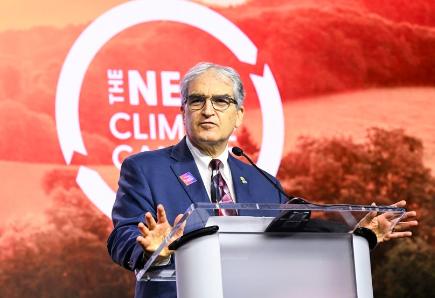
Chief Program Officer, CERES
Steven Maze Rothstein is the Ceres’ Chief Program Officer. He served as the founding Managing Director of the Ceres Accelerator for Sustainable Capital Markets. In his new role, he oversees all aspects of the organization’s programmatic work. Steven’s 40+ years of experience are critical to explore the most effective strategies to focus on and move capital markets towards climate sustainability including the remarkable colleagues in the Accelerator and throughout Ceres.
Steven has had a successful career starting, managing, and growing several nonprofit, social change, and government organizations. After college he was one of Citizens Energy Corporation’s founding team members. He later started and ran Environmental Futures, a management and market consulting company serving enterprises seeking to grow their environmental work. He also ran the New England market for Constellation’s work as a successful electricity broker, the world-renowned Perkins School for the Blind, Citizen Schools, and the John F. Kennedy Library Foundation.
He has worked at local, state, federal, and international levels of government. Steven has served on numerous nonprofit and government boards. He has spoken and written extensively.
Steven has a B.A. with Honors in Political Science from Williams College and an M.B.A. from Northeastern University’s D’Amore-McKim School of Management. He and his wife, Susan, have two grown sons and an adorable granddaughter.