Trust, Transparency, and Methane: A Conversation with Georges Tijbosch of MiQ


 Apple Podcasts

 Spotify

 Youtube Music

 Amazon Music

 PocketCasts

 Castbox
Methane may not grab the headlines like carbon, but it’s one of the most powerful greenhouse gases—and tackling it is critical if we’re serious about slowing climate change. In this episode of Sustainability Forward, we sit down with Georges Tijbosch, CEO of MiQ, to explore how methane certification is bringing trust and transparency into the energy transition.
Georges shares his personal journey into climate leadership, the story of how MiQ was founded, and the progress made so far in getting oil and gas companies, policymakers, and investors to take methane seriously. We dig into the challenges of scaling climate action, the rising wave of pessimism around sustainability, and why he believes cutting methane emissions is one of the biggest “quick wins” available to the world right now.
If you want to understand how data, verification, and trust can reshape climate markets, this conversation is for you.
0:09 Welcome to Sustainability Forward. After a bit of a summer break, I'm here again on the podcast. My name is Rishi. With me is my Co host. As always, Carmina, Carmina welcome. Hey Rishi, nice to be back. Yeah, it's been, it's been quite a summer in Europe. As you know, you're probably suffering more than we did here in UK, but it's hot, right? It's hot hanging there. Yeah, Now, Carmen, I was watching this this video clip of Steve Jobs from, I don't know, 2025 years ago where, where he was explaining what a podcast is. Now, I didn't know. I didn't know how the term podcast came about, but what he says is that it's basically an amalgamation of the words iPod and broadcast, right? So back in the day when the iPod came out, people almost could record anything and others could listen to them on the Internet, right?
1:05 So it was basically people broadcasting whatever they wanted and that content was getting consumed through the iPod, right? So iPod plus broadcast is podcast and 20 years later we are still kind of carrying on with the trend of recording podcasts. When you say that brand is so important to give a name to all the industry on. That that's right, that's right. Now today's episode is quite an exciting one, Carmina, because because you might remember one of our first episodes where we talked about the biggest problems in sustainability. The, the problem of emissions was probably the first one we discussed. And within that methane obviously occupied a centre stage.
1:48 So today we have someone who, who is shaping the conversation around methane when whether it's about policy, whether it's about certification or technology. So we are very excited to, to welcome, welcome this guest on our podcast. Would you please introduce our guest for today? So we have today George. George Taibosh is the Chief executive and board member at MIQ that maintain intelligence not-for-profit Climate Tech Foundation, providing the blueprint for reduction of methane emissions in the oil and gas sector alongside RMI, so the Rock Mountain Institute and System IQ. George helped launch MIQ in 2019. Under George the leadership MIQ has become the largest certification initiative for maintaining emissions in the oil and gas sector, certified over 5% of the global gas supply. George is the former Director of Origination at Centrica. Before that, George was a director on a London investment bank commodity trading desks, including Director of Energy Sales at Goldman Sachs, head of MEA Energy Marketing at Bank of America Merrill Lynch and Head of EMEA Commodity Finance at JP Morgan.
3:03 George began his career in 1996 at BP Benelux as Sales and Marketing Manager for fuels and lubricants and joined BP London training floor in 2000 as Senior Marketer, oil derivatives. So Judge, welcome to the show. Thank you for being here today for this very exciting subject. Great to be on on the show. Looking forward to it. And also with your intro, it made me feel very old. So yeah, looking forward to to talking about that. Lot of experience. That that's very kind of you. So, so let's start sort of in reverse chronological order, George. We wanted to understand first for ourselves, but also for audience, what is MIQ, right? What's in the name?
3:51 What led to its creation? Are there other bodies like MIQ? But what are you trying to do with MIQ? What's your mission? That's four questions, Rishi. So yeah, methane MIQ, basically it stands for Methane IQ, Methane intelligence. So we're all about methane and what will comes without a doubt. What? Why methane and the intelligence bits comes from the fact that what we need in methane is, is clarity, transparency on on the methane emissions and where they take place. And it's not that obvious to do this methane, but those who are new to the subject is invisible. You can't smell it, you can't see it. And it's small leaks, thousands of tiny leaks left and right and centre across the industry.
4:41 So it's actually quite tricky to determine the methane emissions. So you need the intelligence. So that's where the name Methane IQ comes from. I've also heard that MIQ is a spin off of MI 5 or MI 6, but I cannot confirm that or deny that. Yeah, the intelligence part or the lack of lack thereof, I think. Exactly. Probably. Is borrowed from MIQ. Yeah MI 6 sorry. So now you pre empted the question a little bit. It's a topic that our audience is aware of, but we just also like to hear from your perspective, right? Why focus on methane And it's and it's transparency?
5:25 I think it's a it's a very valid question actually, when I mean, you were kind of looked at my history in, in the the more classical professional world was an energy trading in. In summary, methane didn't pop up. And then in 2020, several former colleagues from who were then at RMI and systemic, they contacted me to deal with methane. And I remember one of my first reactions was methane. You mean gas, because methane is the largest component of what's called also natural gas, which is what we use to fire gas fired power stations or to cook at home if you want to, or to heat the houses. Methane is the largest component of that 9095% depending on on the quality of the gas.
6:16 But what we're talking about here is the methane emissions, the methane leaks. So the methane escaping directly in the atmosphere. And I would argue until around 2020 was totally under addressed as a subject in climate change. And because everybody's always been talking around carbon dioxide, CO2, that's the big, the big one we're all talking about that we need to address the problem. The reason why methane is so important is because methane is, let's call it around 80 times more potent than CO2. So molecule for molecule, if you have one molecule of methane escaping into the atmosphere, it is around 80 times more effects than a single molecule of CO2. Now it also lasts shorter.
7:06 Depending on the different scientists methods you use, let's call it 12 years or 20 years. By 12 years it actually can start to disappear from from the atmosphere, so it lasts shorter. However, the the 80 times factor is key. And so if you take the methane emissions, there's three big parts on methane emissions. It's in the oil and gas industry during the production and the transport and the transformation of those commodities. Also coal industry by the way. Secondly, agriculture and that is from principally from from cattle and then all rice fields as well. And then thirdly, landfill there there is and that's human caused methane leaks.
7:49 There's also obviously natural like swamps for example. Those three, if you run the calculations and again use the AT multiplying factor are the cause of around 30% of all emissions. And that wasn't really addressed I think in earlier years. And and when I started this in 2020, and again, I know I wasn't the only one going like, oh, methane, what, what do you mean methane? And so if you look at oil and gas, and I think oil and gas is the interesting one from that perspective, because oil and gas is 10%, we'll come to numbers what that translates into because 10% of the the global problem is enormous.
8:39 It equates to give or take all the cars and trucks on the roads, emissions now in CO2. And we're also obviously all following the, I don't know, EV debates and how we're going to scale away our existing cars to different cars. Most of us will realize this is going to take us decades to do this. There's more than a billion cars on the roads. Not everybody can straight away afford an EV. And even if we have EVs, we still need to have windmills to feed the electricity in there and maybe not coal stations anymore. So it's a long road and the difference and that's why I found methane for oil and gas such an interesting 1 is that can actually be addressed with existing technologies.
9:22 There's some some small tweaks that need to be made and some needs to be scaled up. We don't need to invent anything. And the other part that's interesting is this can be done by large well run companies generally speaking. So it is not a consumer problem, it's a business to business problem. And that's where I think when we started MIQ, where I see I, I really see the opportunity is we can address this technology is there. We don't need to invent hydrogen in planes, for example, for this. It's not needed and it can be done fast. And so the way I look at methane emissions in oil and gas, at least it's something to address this decade.
10:04 This is not like let's talk 50 years forward. Yeah. And and so it's it's it's an enormous opportunity. You can call it a win win the low hanging through different expressions, but it all comes down to the same. I would actually say it even stronger. It's the no regret option. We should just do this anyway, irrelevant of how we're going to transform the the rest of the of the problem. So that's why me saying is, is is key in oil and gas. Yeah. And when we, when we did our research around MIQ, we also found sort of this information about the certification model, right?
10:46 What is it that you're actually implementing on the ground? Is it sort of going side by side and telling them and grading them on a certain type of system? Yeah. So the, the as I said earlier, methane is actually quite a tricky 1. You can't see it, you can't smell it. There are, there is no perfect single methodology to measure the methane emissions at a industrial production side for oil and gas. So it's not like, OK, let's say we want to regulate speed on the freeway. OK, we all have speedometers in our cars and I'm sure they calibrate it, but it's quite straightforward technology.
11:28 And I think that here in the here in the UKI can't remember the exact number, but I give you 5 miles an hour of of kind of. Tolerance. Tolerance. And each country's got slightly different tolerances, and that's fine. But we don't dispute those number. But we all try when we get caught, clearly. But it's not that If I'm doing 70 miles an hour, I might have been doing 140 miles an hour. That's just not the case. But methane emissions are much more complicated. You have to imagine these oil platforms or production facilities as sometimes hundreds of square kilometers with thousands and or 10s of thousands of pipelines, thousands of valves in the middle of a desert, in the middle of nowhere, in the middle of a harsh ocean and in sometimes inhospitable regime places. So this is a complex problem actually. And So what we've done, we what we want to do is we created basically a standard to say, OK, this is how we're going to determine the meat and emissions of a specific assets. Here's the rules, not different than a financial standard actually, because to audit your company you need rules as well. Well, that's called a IFRS or UK cap. So we've created the same for methane auditor comes in, they follow those rules and they then determine what we call the methane performance of that asset. And then comes in the second part. And the second part is that allows those producers who at this stage of the market tend to
12:58 be the more progressive producers to go to the buyers of the gas and say actually, you know what, I am producing gas and oil is coming in as well at lower emissions, emissions of XY or Z. Because I have been certified, I now have a proof that those were the emissions of my production facility. And So what we're doing is creating a market for that gas or that transparency of gas, not different than if you want to buy, I don't know, bio products at the supermarket is probably a very good comparison here. That's quite interesting job. Just to summarize, you said methane as a CO2, they have something in common you cannot see, you cannot smell it. So looks like the problem is not there, even though sometimes when we look at methane in our homes, we smell something. Just of course to clarify for the audience, there's some additives that are on top.
13:50 Actually to be sure that we smell it because it's an explosive gas is dangerous. So we need to be sure it's there, but in nature doesn't doesn't smell, you also give us some number. So what I understood is 30% of the problem more or less of greenhouse is coming from 18. You say this therefore 12 years compared to CD is probably shorter, but is still a big part of the problem and we can address it today. You mentioned the industries, the oil and gas and the other industries such as agriculture and the landfill. Now going back to oil and gas also a little bit based on our experiences, I think there are three sources probably where emissions could happen.
14:38 And you touch on it though there is leaking in the infrastructure now when the methane has been produced or transported around, but there is also the flaring or there is the venting. So other over operation that probably people don't realize, but these are common in the IT could be common in the operations when extracting, when extracting gas. I think one of the issues there could be that these three sources most of the time are very fragmented, distributed. So it would be difficult for somebody probably to solve the problem as he needs to solve many small problems. Also geographic geographically dispersed is this one-on-one.
15:21 One of the main barriers is that operators has to solve to work around to to solve this problem. Yeah, no, I think you, you, you hit the nail there on on the head. It's I often compare it a bit to a water leak in your home or a dripping tap. You know, it's there, but gosh, it's tricky to kind of repair that tap or there might be a water leaking. You see, you see it in the wall and you need to open up that wall. And OK, are you? Now imagine that thousands of times as opposed to, I don't know, a factory belching or whichever pollutants into, through the smoke stack into the air or into a river. That's like a single problem that can be dealt with. So yes, I I agree it sits across the facilities at many now just to counterbalance that a bit as well. For example, the when you do flaring, you have plants that might not be burned, which then goes straight away as methane into the the atmosphere.
16:24 That tends to be quite straightforward. Localized, yes. Localized, yeah. Now it's also not a straightforward 1 to deal in in many cases, technically speaking. So you, you have a bit of both. So I, I think where the industry got to they, because let's not forget methane is obviously is gas principally or gas is methane rather or contains methane. It's always an explosive as well. So the industry has clearly already gone below the levels where it becomes a danger for their health and safety. Because that is obviously the first one that you, there are very few areas where we see somebody leaking, I don't know, 20% across it'd be a hazard, clearly an explosive hazard. So they've gone below there.
17:09 And then the second one part we should not forget either is that what an operator does not leak, an operator can sell. And that's unique in methane versus any of the other pollutants. The other pollutants, I don't know, lead, for example, you then need to get rid of it or SO2. How do you deal with that? You, you can't just sell it generally. So you need to dispose of it. Methane is unique. What they don't leak, what they don't vent, they can sell. So the, the, the, what we're talking about is the last percent of the last 2%. But the key here is the 80 multiplying factor that that's where it is this whole problem comes from. And so yes, you need to create a comprehensive system. And, and that's what we've done with EMIQ standards, whereby not only do we determine the methane emissions by the performance standards, but equally we score them in that standards on how they manage the methane emissions. So how did they deal with flaring? How did they do?
18:09 There's a process called Eldar is leak detection and repair and there is good practices and less good practices and best practices around this. And how do the company approach this? And so we almost give them like a guideline how to get better at managing the methane and that's kind of all, all included. So it needs to be very comprehensive. And so the way we look at it is managing methane is, is an is an ongoing standard operating procedure type of approach SOP's called in the industry as opposed to let me do a big CapEx project, it's rarely the CapEx project levels. And so that's why the operators and the engineers are key on this.
18:54 This is something where we see it from our auditors. We hear it. They, they, because our auditors have to go on the site, for example, because again, methane is a complex subject. So we want them to go on the site. They then speak with the, the, the truck drivers, for example, and, and, and they discover items around methane and how they manage it. And, and, and, and that's key. You need to get everybody involved on, on this. There's no quick big solution. Interesting enough, George, you've mentioned the ATX more potency a couple of times. Let me ask you this controversial question. Should then there be there be a ATX higher penalty on, on, on methane leaks?
19:40 Is that something the industry is it? Is it something that we get the industry to act? So, so in a in a way, and I need to try to remember some of the numbers, but for example, Norway's got some form of penalties and I think they are in the thousands of dollars per ton. So if you then re divide by 80, you, you get to, I don't know, a couple of dollars equivalent, I can't remember the exact numbers, but in the numbers that we more used for in the CO2 world. So yes, in my view you do have to multiply those. And then obviously if you don't bring it back to the CO2 world, you can get the the cheapest carbon offsets probably for a dollar. And then on the other end of the range or probably somewhere in the middle, you've got the EUETS that's looked at lately, but it's probably around 70 or €80 per metric ton. So.
20:36 So even there you have a large variability depending on the on the specific use case. Yeah, interesting. So MIQ has been in in operation for for a few years now. Where where do you see sort of the more progress or adoption coming from? What have been the highlights of the last few years? Yeah. So contrary to our expectations, this actually got a really good pick up in the United States. Initially, we were expecting this to be picked up much faster. In Europe. We're generally speaking companies and consumers, voters are more in the progressive kind of landscape. Now.
21:26 Obviously what happened around the time when we were started up, that's also when the Russian invasion happened like a year later or something like that. And basically I think everybody in Europe was busy scrambling for gas and energy and trying to keep the lights on. And it almost seems like a far away memory now, but it was pretty stressful on the system and for our governments and so on and so on. Whilst the United States is, is, is a very, very large gas market and I, I think most European listeners might not realize that, but the US produces around 100 BCF a day of gas.
22:10 That's 1000 BCM per year. That is give or take more than twice what Europe consumes as a total entity. And that's about 25% of total gas production globally. So it's a huge market and obviously that's ramped up massively over the last decade or so due to shale gas. So it's a thriving industry over there. And logically, because it is a fact, there are many cases there where and especially the Permian is, is well known for this, where there have been many facilities or are many facilities that are actually leaking quite significantly. And there's been a lot of attention around that. And So what we noticed is there, there have been many companies that say, but we are very low methane.
22:55 We are, we are managing this properly. And, and what certified gas does, it allows companies to differentiate themselves from the pack and, and we encourage that we, we are a strong believer of let the leaders kind of pull the rest in and let the rest improve as a consequence because of market forces. So yeah, the start up has been principally in the United States. We're now certifying 20% of the United States gas production, which is enormous quantity. And the next stages which are happening now this year is we're expanding into Europe, Middle East and Asia Pacific areas as well where the interest is increasing. And so we understood the problem is big the TX times we understand we need to go fast because it's something we need to solve and technology regulation are are coming. What do you think George, are the main barriers there to go even faster here to increase adoption? I think if, if, if you want to summarize the barrier, I think a big one is inertia across society, but not necessarily inertia in, in the ways that some people might read it. But what you have, because methane is such a complex subject, what we do notice is
24:27 there's there's loads of opinions around how one should solve this. And so you have lots of kind of stakeholders arguing their case, lots of commercial interests coming through as well. And so whether it's the NGO community, the scientific community, people who are in favour of policies or people who are in favour of more markets driven approaches, you have a bit of all of that playing out through society. But I think it's coming to a head now where, for example, what we've had is, is, is a big change is last year the EU voted in methane regulations and that, that implementation has started. That's happening now.
25:14 The downside is to some parts of that legislation are very unclear and need to be solved. And, and that creates complexity in the markets. We, we, we believe that certified gases is a clear pragmatic solution to solving how to deal with the EU methane regulations. But that's an ongoing debate at this very moment and I think after that it will be a bit clearer which way companies go. The the other thing is let let's not forget how much progress has been made the last five years. So in my Mccue we're a not-for-profit and and there's other initiatives such as OG and P by the UN for example that started with OG and P 2.0 around the same time with that version I think.
26:06 So MIQ in it's five years of inception, we are now certifying 5% of global gas market. So it's an enormous amount of growth in those short years. I often say, well, we're now at the stage of the iPhone 2 if you want to or three or something, something along those lines or EVs in the year 2010. And I remember in 2010, I might not even have known what an EV was. And so that's where we are. And OG and P for example, they are now dealing with I think a 30% plus of the companies on a global scale. So they've had enormous growth as well. And, and those are two voluntary initiatives that's grown enormously, but we need to take it to that next stage.
26:50 And I think that's where the regulation and especially the EU regulation is coming in because I, I want, we, we need that, let's call it the stick of the regulation to go to that next level. So I can, I can see that happening over the next couple of years and accelerate away. But where I want to end up is that basically it becomes part and parcel of any commercial transaction at all times, just like you deal, you want to know the price of your goods, the destination, the flexibility. You want to know the methane intensity or the carbon intensity of the product. It's there on the statements, no questions asked.
27:31 You don't need to read a scientific report to understand what it is. And currently we still have a bit in that I need to understand methane science. No, no, no, no. We need to take away that level of complexity and come to a common language that that is the key for me. And the one probably the driver, George, as you said is coming from the from the end user perspective. So this kind of awareness about the problem, how big is the maintain problem. Now when we look at the macro, let's say landscape today, it looks like the pendulum swung from one side to the other in the energy dilemma. So today probably is much more interest in the energy security versus the other, the other aspect about the economics or about the sustainability part.
28:22 What's your view on that? Because I see we see this impacting lot of discussion about climate change ESG and but I would like to understand your, your view on the current, the current scenario we're living. Yeah, I'm glad. I'm glad you're asking that. Actually. I love the term energy trilemma. I think it is sometimes overused and and there are some issues with it. But I used a lot to frame things when I was working at Centrica, for example, because what it's kind of says is there is not necessarily an ideal solution. You're always having to balance those three forces and I think the last decades society or maybe 2 decades when too much to only looking at the sustainability angle, forgetting even about price, well, we should just buy a VS we should just kind of build the windmills at whatever cost. And that's before we then forget the energy security of supply angle, which has been proven vastly underestimating in this particular case, the effects of the the Russian invasion. And so I think it's a good reality check that's come into the broader debates and that was needed from my perspective, the last 1020 years, it's been too
29:53 much, I would argue lecturing around how one should do sustainability rather than actually implementing. And so I think it's a healthy check. I also think it's unfortunate that we have to go through that kind of reality check and or including potentially some of the reasons why it happened clearly. And I can understand why it's created, why some of the sustainability, let's call it I'm, I'm deliberately using the word lecturing here now has created some including political backlash. I, I don't think from a, I think many of the proponents forgot to bring with them the rest of the population. And I think that's been very unfortunate. I'm, I'm much more a pragmatist from that perspective, maybe because I'm Dutch, that's just what my whole nation tends to be, tried to find a solution and move forward. And so that's what I want to do.
30:55 We need to find pragmatic solutions to this and they tend to be much more middle of the roads. And it's not about ideology. And so I think it's a healthy check on. So I'm in in that sense, I'm actually quite optimistic in a way for the next decade. But the, let's say, the narrative, we have to move away from the lecturing perspective. I think that's key. And just find solutions, including technological solutions. So yeah, methane is one of them, as as we explained earlier, can be done, can be done in a decade. So my view there is, let's go and do it, yeah. So George, five years in, what do you see in store for MIQ in the next 5 years, given the new geopolitical reality, where the industries do you see sort of entering new sectors? Do you see expanding more deeply into the energy system? Where do you see a MIC?
31:59 You're going from here? Well, first of all, I might want to retire again because I came out of retirement for this. So I need to do this again and but in five years. So we, we are starting to to touch upon adjacent sectors such As for example, blue ammonia is a is a logical adjacent sector to what we're doing. But I think what our approach shows is that ultimately you're going to need that transparent information that is transferable together with the commodities. And ultimately, I hope that we get to similar approaches, whether it's for steel or whether other commodities or plastics. And, and we're starting slowly to go into those. But where I want is just like when, when you buy, when you go to the shop and you go in the morning, I don't know. I just went past the Pret and bought myself a coffee. And you can then buy whatever it is and you can see how many calories are in that specific or how much salt is in that specific sandwich.
33:04 I want that to be the same for carbon intensity and methane intensity. When a trader buys a cargo of crude, they just know it. They know the full upstream emissions up to that point. And when they then push it through a chemical factory to transform it into, I don't know, Napster, and then maybe polypropylene and so on. At each stage, you just know bang, bang, bang, here are the emissions. And people then make decisions, as I said earlier, not just on the price, but also on the emissions. And that's how we're going to solve this ultimately in my view. And competition works, markets work. They are very, very efficient. You just need to and and that's really what MIQ is trying to do is to try to create a, a credible, transparent working market.
33:49 That's key. And then the rest will happen because profit motives work from that perspective. Excellent Now, George my you know takeaways from this discussion probably linked to, you know the previous discussions we've had in other contexts is that is that pragmatism always Trump's idealism, right You there are solutions available to kick off things today. Industry doesn't have to wait for too long to, you know, to get this started, right? So if if all of us had this practical view of how methane emissions can be can be dealt with, more progress can be made. Going forward so.
34:33 Fascinating episode for us understanding directly from someone who's actually practicing it on the ground and helping others others practice it. Carmeni what What were your main takeaways from from this chat with George? So now I mean really interesting in our George explain solving the problem by creating a market. You also spur me the ideas about what happened with the carbon market and what how that kind of idea work now that we also want to create a meeting market. And what are the lesson learned actually from that experience that the mistakes or that we can probably avoid or go around when we're talking about this new market.
35:22 Your reference, George So. Oh, totally. And I was involved in many of these carbon markets. So and that, and that's probably why I'm or got asked to, to help with this because in the design of MIQ, there's a lot of, let's say, undesigning of what we've seen in some of the carbon markets because many things have gone wrong in some of those carbon markets. So you have to be honest, if you take the carbon offsets, for example, and there's many issues around that, and that's why it's not properly scaling in my view. A better example of how things can work is the EUETS, although that has gone through huge issues as well when there was a gigantic oversupply for a while. So yeah, this is all about what we call market design, market activation, and it has to be designed for the long term for credibility.
36:13 Traders won't show up, buyers won't show up, operators won't participate if it's not credible. And we'll stand the test of time. So. So for me that's the key to create a market and where you don't want to end up is in, I don't know, I'll have 2008 somebody having to clean up the market as happened with the financial markets crash at that time. So it rigorous design is is key and that and that's sometimes a challenge for us as as MIQ to take that always take that long term view of of wanting to create that credible market are. You OK? No time has come for us to close today's episode.
36:53 But before we do that, thanks George for your time, exciting discussions and I'm sure our audience will love every aspect of it. Thank you for joining the show. My pleasure. All right, for for our audience, as you know, you can find us under the banner Sustainability Forward on all major podcast platforms. Most of our episodes also show up on on LinkedIn, so you can be in touch with us through LinkedIn as well. We have got a number of interesting episodes planned for the rest of the year. So we will look forward to your active participation with those episodes.
37:33 Thank you again. Thank you, Carmen. Thank you, Rishi, looking forward to the next episode. Thank you, George. Thank you.
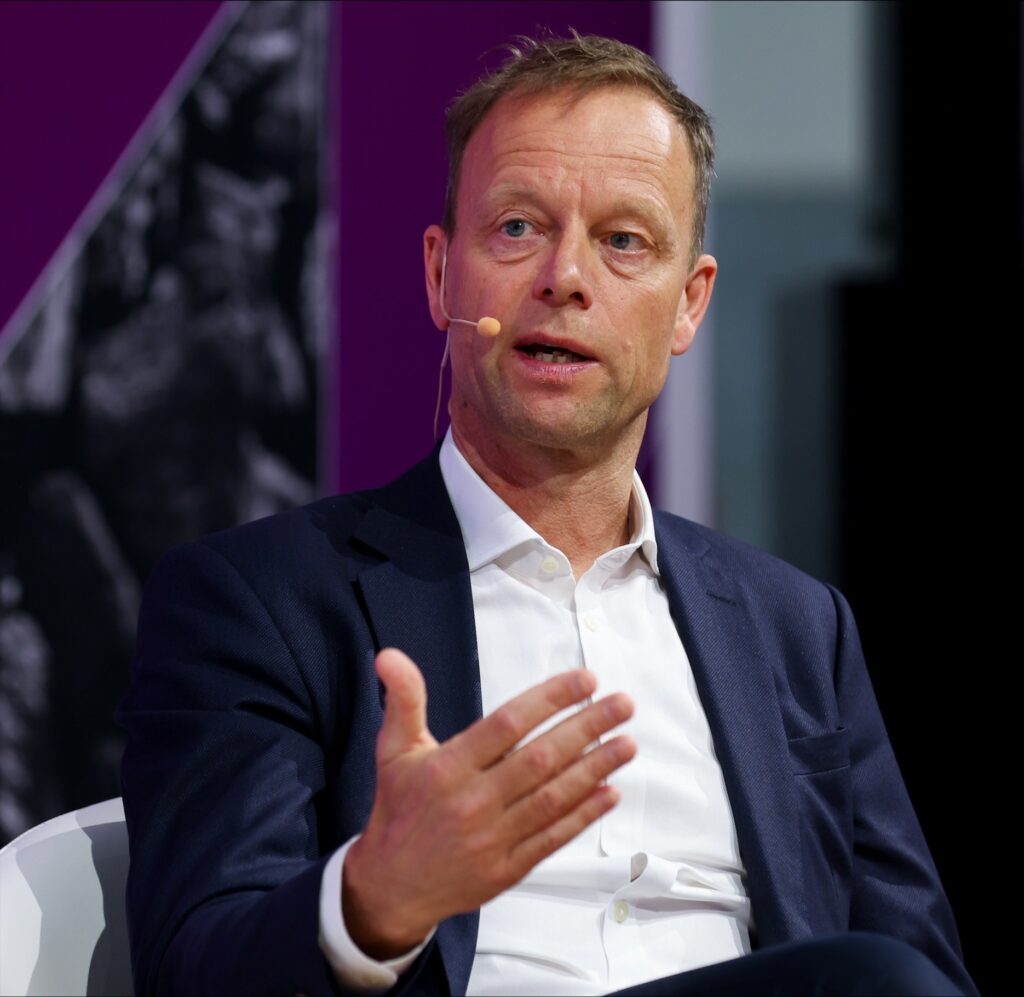
CEO, MiQ - Methane Intelligence
Georges Tijbosch is Chief Executive and Board Member at MiQ (Methane Intelligence), a not-for-profit climate tech foundation, providing the blueprint for the reduction of methane emissions in the oil and gas sector.
Alongside RMI and SYSTEMIQ, Georges helped launch MiQ in 2019. Under Georges’ leadership, MiQ has become the largest certification initiative for methane emissions in the oil and gas sector, certifying over 5% of the global gas supply.
Georges is the former Director of Origination at Centrica. Before that, Georges was a director at London investment bank commodity trading desks, including Director of Energy Sales at Goldman Sachs, Head of EMEA Energy Marketing at Bank of America Merrill Lynch, and Head of EMEA Commodity Finance at JP Morgan.
Georges began his career in 1996 at BP Benelux as Sales and Marketing Manager for fuels and lubricants, and joined BP’s London trading floor in 2000 as Senior Marketer, Oil Derivatives.