5 Sustainability Myths Every Leader Must Stop Believing


 Apple Podcasts

 Spotify

 Youtube Music

 Amazon Music

 PocketCasts

 Castbox
This week, we sit down with IMD Professor and World Economic Forum Young Global Leader, Julia Binder, to tackle the biggest misconceptions shaping corporate sustainability.
From ESG confusion to climate myopia, “sustainability is expensive” narratives to the belief that sustainable products don’t sell — we break down the stories that have quietly distorted how leaders think and act.
In this episode, you’ll learn:
-
Why ESG was never meant to measure positive impact, and what companies get wrong when they treat it as sustainability.
-
How climate has become a shorthand for sustainability, and the planetary boundaries we’re dangerously overlooking.
-
Why sustainability isn’t a cost centre — and how leading firms turn it into a strategic investment.
-
What really stops sustainable products from selling (hint: it’s not consumers), including performance, pricing, and sales-team barriers.
-
Whether we’re facing “sustainability fatigue” — and why the feel-good era is over, but the real work is just beginning.
Julia brings clarity, candour, and optimism to one of the most misunderstood areas of modern business.
If you’re a business leader, innovator, sustainability professional, or just curious about what’s really happening behind the headlines — this conversation is for you.
🎧 Listen now and subscribe to Sustainability Forward for more conversations with global thinkers shaping the future.
0:08 So welcome to sustainability forward Carmine. My Co host is with me and my name is Rishi, your host. So Carmine exciting episode on our hands today. Today's episode is all about challenging the the biggest misconceptions surrounding corporate sustainability. Of course we come across. Hey. We come across, you know, buzzwords like ESG, Net 0 green products and many others. But how much of what we believe about sustainability is actually really true, right? And that's one of the questions we are going to uncover today.
0:50 And these myths that surround sustainability do not just confuse the conversation. They can quietly distort the sustainability agenda, corporate priorities and and public perception about sustainability. So why do these myths persist even among well-intentioned leaders, right. That's one another question that we are going to try and answer. And what can we learn when we separate these stories from facts? And to to help us answer these questions, we have a very, very credible guest with us. Would you, Carmine, please tell our audience more about our guests? Yes, and thank you, Rishi.
1:31 Looks like you're cooking a very interesting episode today. And we brought to the show Julia Binder. Julia Binder is a professor of sustainable innovation and business transformation at IMD is the school in Lausanne. She was named a World Economic Forum young global leader 2025 and featured on the thinkers 50 rather least in 2022. Julia is the co-author of the circular business revolution and has spent over a decade helping organization navigate the intersection of innovation and sustainability to drive real world impact. So, Julia, welcome to Sustainability for Wealth podcast.
2:13 Thank you so much for having me. It's a pleasure to be here. By the way, for those who are not aware of Thinkers 50, it is a very, very credible list. So Julia, we are, we are very sure you're in very good company. Some of my professors from my Business School who made it to the list, I have a lot of admiration for themselves. Congratulations to you for being. Thank you so much. So, Julia, as we said in the introduction today, we are going to try and and and and bust some of the myths surrounding sustainability, right? And one of the themes that comes across very often in this is, is ESG equal to sustainability? Right.
2:57 So ESG metrics and ratings sometimes become synonymous with sustainability. We sometimes end up thinking that if a company scores very high on these ESG metrics, it must be very, very sustained, right? So first of all, maybe help us understand why has ESG become so dominant in this, in this corporate sustainability narrative? Yeah, it's actually one of my favorite questions because I think the majority of people that at least I engage with, and they can be on all levels of the organization, actually more or less think that ESG and sustainability are the same. So the most common answer I get is usually that, yeah, look, sustainability is the end goal and ESG is a way to operationalize that on the company level, right? This is one of the most common thinking around this actually. Many companies had renamed their sustainability activities under ESG.
3:49 And actually it took me a while to figure it out because we have been in the stability community for quite a while. And then ESG suddenly pops up and everybody gets overly excited. And suddenly we managed to see something that we hadn't really achieved with sustainability was that ESG was on all of the board agendas and everybody's talking about this and we were wondering, So what did we do wrong, right? So what has changed looking at this and and really trying to understand, OK, what is at stake here? And I think what we're seeing is basically that it helped to make this, let's say, and that sounds a bit demeaning, but the fluffy concept of sustainability, which sounds like an end call, but you don't really understand what to do in practice. Now, it helped to really operationalize and gave it clear dimensions, gave it clear measurable constructs. And I think this is the reason why we saw this actually entering the business world so quickly. Now what is really at stake though, and I think this is the most important thing, is that what we need to understand is that from the beginning, ESG has never been the idea of measuring positive impact of an organization on the world. From the beginning, it really was all about how do potentially environmental, social and governance factors impact the financial bottom line of the firm. So it really is a risk management and investment framework.
5:11 So I always say it's like you look at sustainability. This was always about how do I as a company with my products, my production, my processes, my supply chains potentially affect people and planet. So it's a people and planet centric framework and basically use two turns to their own and say looking at all these factors and seeing that some of these, whether we look at CO2 taxes or evolving regulation or changing consumer demands or investor demands actually could potentially pose a risk also for the company. So I wouldn't say that they're completely separate and there are some topics that overlap. But usually what you will see is if you compare these topics is that the the topics where the company potentially has an impact are much broader.
5:53 There are many more topics that are relevant here. We're looking at a variety of topics that really affect people and planet, not just the financial value of the firm. And I think that is super important to to understand the differentiation because it really explains the confusion around some of these G ratings, right? Because there were many people that were super confused, OK, why does Tesla not get not make it to the top ESG performer list, but Exxon Mobil, which is an oil and gas company is a top ESG performer, right? And many people were like, OK, so it is really all greenwashing and no, it's not basically Exxon Mobil. That's exactly what the framework is supposed to do. It measures how well Exxon can actually manage the risks that come from ESG factors, not how big their impact is. Thank you.
6:43 Now that's very, very clear on understanding this. Now going back to the To the East G framework, what do you think has been become so dominant in the corporate sustainability narrative? I mean, one of the reasons is that investors really put it on the table, right? And if you have investor or shareholder demand to put something on the board's agenda, then obviously companies will follow. And I think this was the reason why companies were waking up to this. And, and I think it is absolutely, rightfully so, right. As a good business manager, you want to understand evolving risks.
7:23 It's part of your job as a board member, but also as a business leader to understand what are potential risks for governing your firm. So that is the reason why I believe it made it so quickly on the agenda for the first time. We're not talking about this. Yeah, OK. There are some distant effects that are difficult to measure, right? We're talking about very immediate risks. We're talking about potential costs. And so this is the reason why from my perception at least, a lot of companies, we're really looking after this quite, quite strong. And I think this is still what they're doing today. Despite all quote UN quote backlash and disinterest in the topic. Most companies have understood there are certain risks when it comes to sustainability that actually we need to safeguard if we want to continue making good money now. You mentioned the word backlash.
8:19 We use the word in one of our previous episodes. In a subsequent episode, we were corrected by our guest speaker to say it's a reset, right? Whatever it might be, we know that there has been a shift right now. What is your view of this? Is this backlash slash reset around ESG? Is it a risk to genuine sustainability efforts or has the right thing actually happened in the sense that people are now concentrating on the things that actually matter to to get to this eventual vision of sustainability? Yeah, it's not that easy, right? I think we're in the midst of this, whatever you want to call it, backlash, burnout, reset. And so we will not be able to 100% tell whether it actually in the end is positive or negative, right. We're because we're just witnessing first hand and in real time.
9:13 So I think what we're seeing is that the concept of ESG has been extremely politicized starting in the US, starting mostly by by the Republicans who basically deemed it as a vogue concept, which if you follow my previous definition, there's nothing woke about ESG. It's a risk management framework, right? It's a good business management framework, but it was politicized, it was high tracked if you want. And so basically people evoke equated if with with being vogue. And this is where we saw then a lot of the backlash coming from now. Is it healthy? I don't know. I can just tell you that I think where we are coming from was a bit of a feel good sustainability error, meaning that everybody for whatever reason, because there was a lot of buzz, because there was a lot of noise, a lot of push, push to actually take a stance on these topics. Everybody had met 0 targets.
10:05 Everybody had something on sustainability. We all congratulated ourselves that we're looking at sustainability. But actually, if you look at how the planet is doing, how how we have actually progressed on many of these topics, the progress was fairly limited. So in that sense, I think it is an important wake up call. Will it go in the right direction is to be seen? What I'm seeing personally is that those companies that had skin in the game, they're still in the game, but those that actually really just had it as a nice tech line and because everybody was pressuring them to also put sustainability somewhere, they're not out of the game. So I think what we're really seeing is those that were serious, they're still in there and they're even doubling down.
10:51 And that could be what you talked, a healthy reset, right? Those that really just did it for lip service, they're out, Yeah. And so maybe it gives us more clarity. Maybe that is the positive aspect in all this backlash. Yeah, I see some parallels with the with the whole AI revolution as well. Everyone needs to talk about AI or the other, but at the end of the day, some will take advantage of it, others will fall by the wayside. Yeah, interest and we talk a lot about OK, there are a lot of discussion about how to structure framework to solve the problem as you said Julia, some of them that doubling down some of their others, but the problem is still there, it's growing. This is probably something we don't need to we cannot forget. And actually that brings us to the to the second myth. There is always the link, probably wrongly done, that sustainability equals climate that is all about reducing carbon emissions or achieving at 0. And we know this is a very narrow view of sustainability. So what do you think climate has become a short end for sustainability, Why it has been this kind of misconception? And you can help us to have some clarity here. Yeah.
12:20 And again, this is one of the questions that are asked very often in programs. And this is what do you think when I say sustainability? What comes to mind 1st? And for most, it's actually climate or CO2 emissions or net 0. So it all relates to the whole, let's say carbon story and or greenhouse gas emissions. I think some call it in the literature, they call it climate myopia. We have almost like a tunnel view on just climate. And I think, hey, let's not underestimate. Of course, climate is super important and there's a massive challenge and it's a global challenge. So we rightfully put a lot of attention on climate. One of the things that I'm trying to say is climate is just one of the many topics that we need to look at when we talk about nature and environmental aspects of sustainability. There are some that I say are at least equally important, if not maybe more pressing at the moment. So I think the idea here is just to say we need to understand that the topic is much broader.
13:20 Now to your question, why is that the case? I think we have talked a lot about climate. We have tried a lot with the Paris climate agreement. We have started to really put a strong focus on this politically from the corporate world, investor pressure. So I think we rightfully put a lot of attention on this and we have started many say one of the reasons why we put so much attention is that we can now really measure it. It has become much more measurable, comparable. We have frameworks, we do have regulation that pushes us to go more in that direction. And I think all of these factors together with increasing awareness by consumers and other stakeholders has actually led to put the topic on on the radar for many companies and and the public as a as a whole, not just companies. And I think one of the good framework that is up there to sanity check this is the the the planetary boundaries, right? And we just did.
14:20 I refreshed the episode with Ishi because now we have 7 out of nine, if I remember well, that are outreached. The safe zone and climate, yes, is one of those. But there are many, as you say, that are impacting our life on the planet, the only planet we have. Yeah. And it's it's actually the same framework that I use all the time, the planetary boundaries. And I think you mentioned 7 out of nine. For me, one of the most worrying is actually biodiversity because this is one of the ones that we cannot easily reverse. Water is one of the ones that I find extremely worrying. If you look at the trajectory in just ten years, how much we pushed it out of the safe operating zone, I think many think this is like 100 years evolution, and we're really talking about 10-15 years here. And maybe if we bring it back to the planetary boundaries, one of the things that you can see is that why we look so much at climate is if you look at all of these dimensions, and I mentioned just a few, climate is almost like you put fuel in the fire.
15:21 It makes all of the other dimensions worse, right? I can lose species that say fish because I overfish or I build dams, which is human activity, but I can also lose it because of we heat up rivers, lakes and oceans with climate change. So I think they're important interdependencies. And This is why climate obviously super important, but depending on which country you are and depending on which supply chain or industry you are, some of the other dimensions, the global food value chain, for instance, soil health, biodiversity of water, all of these are extremely important. Yeah. And and so there is a lot to cover beyond climate. I mean, these episodes on the 9 planetary boundaries are some of our most downloaded episodes. So certainly there is the recognition of the fact that there's a lot to do beyond beyond just climate change or carbon now because there is so much to do. One of the questions or myths that seems to come across is that it is definitely going to be expensive, right? So equating sustainability with cost. And the the myth that we can summarize is that sustainability is going to be very expensive.
16:26 It is either a compliance burden or sort of a luxury item that eats into profitability of corporations. Would you help us understand why the first of all is it, is it even a myth? And then secondly, you know why does this myth persist? Yeah. For me, it's 100% a myth because I mean what we see and this is what all studies show, the cost of inaction will be much higher as the cost of action. And so that is the important one. But I think let's let's cut the level through the noise. Why do we see and always equate sustainability as a cost? Again, goes back a little bit for me to the, let's say sustainability 1.0.
17:06 We are putting sustainability on the radar, but how is sustainability actually approached by business at the beginning? And I'm talking like 20-30 years back more as CSR activity, meaning I do business as usual and then I need to plant some trees in Madagascar or open some other help schemes or whatever that cost me money because the I have have absolutely nothing to do with my core business, right? And of course, then it becomes a cost because it is not integrated into my core activities, but it's basically a side activity. And this is, I think where a lot of this idea comes from that sustainability only costs US money. But even nowadays, if you look at this, for most companies that I've seen, sustainability is still the least strategic topic. Meaning what we oftentimes do is we'll do a lot of sustainability initiatives.
17:55 These initiatives, they keep us busy. They are nice in our sustainability reports, but usually they are under resourced and understaffed. And basically they never really get traction or escape. And this means that basically I have to put money on the table without these initiatives ever really becoming a course of the business and really playing out their strength. And one of the things that I always equated with is if I'm in a session and there's a session AI and a session on sustainability, when we talk about AI, we always talk about an investment. When we talk about sustainability, we always talk about a cost. And I'm like, that is surprising, right? Because if you look at all the studies, most actually say that when we look at AI quote, UN quote, investments actually 80% fail. So it is in large part for companies also a cost. But for one reason or the other, as soon as we're in the virtual realm, we talk about investment.
18:49 And as soon as we're in sustainability, we talk about cost. And I think this is also where we as a sustainability, let's say community or professionals need to help companies understand if you actually manage to align it to the core of your business in many ways, there are directly indirect benefits from sustainability. It could be that you get better the ability right traceability that you invest in, how do I reduce in energy usage, water usage, All of these are cost drivers as well. So I think a lot of this is about if we manage to integrate sustainability in the core of our production, our processes, our products, then actually it's an investment. If we really do it as a side activity, if we do it small to small with no scale, it will always remain a cost burden.
19:35 Yeah. I also notice in some of these conversations that talking about sustainability as a cost is also a good excuse to not talk about it or to divert away from the topic. And this comes across with many companies. Yeah. And again, but I think what is so important is one of the reasons why we have this as a problem, I think is that we're just managing on different time horizons. If we're really just only looking at the quarterly reports, it may come up as a cost. Oftentimes sustainability advantages require some time until they play out their strength. So it means that I may need to invest now, but I think it's a midterm investment, right? Oftentimes it's not the direct payoff. But it basically means over time, actually, we'll do us and serve us better.
20:27 And if you think about it, just as an example, I mean, look at coffee and chocolate at the moment. Prices are going through the roof. People would have told me 5-10 years ago, regenerative agriculture never pays off, right? It's just a cost right now, those that have invested word by word are the ones that better weather the storms and climate change and all of these. So it actually does pay off, but again, it oftentimes shows at a different time frame and this is what our economic framework is not really well organized for. And it's interesting what you say because it's where there is no link to the risk reception and to to endurance to really inject some antibodies in the in the in the corporate framework to be ready for these changes then you will not be ready.
21:18 So the kind of effort has to be linked as you said, it cannot be just something you do on the side, but something linked to your operations, to your good market, to your supply chain and. Not just risk coming, but also opportunity, right? So one of the things I really try to instill is just thinking that we used to approach sustainability solely from a risk lens and ESG has reinforced and doubled down on this. But there are also big opportunities for differentiation, for increasing the return on your investments, for making your supply chains more resilient. All of these I would frame not just as a risk but or de risking, but actually also as an opportunity to gain some important direct and indirect business benefits. This bring us actually to the to the next meet. So with the previous one was probably the the CFCFO meet also stability as a cost.
22:09 Let's go to the to our Chief Marketing officer meet about sustainability products don't sell. So probably and me to say the customers say the consumers say they care about sustainability, but we don't pay for it, don't pay a premium for it. Is that really true? What really can make sustainable products more successful? It's a push from the company or support from the customers. So how do you see that? Yeah. So I hear that quite often, companies calling me up and saying, look, we have a sustainable product, but it doesn't sell. And then I always say, OK, let's pause here and let's try to understand what have we tried, how is this product position and so on.
23:00 I think generally I see three big problems or let's say trade-offs. I call it the performance trade off, the price trade off and the sales trade off. The performance trade off is basically to say, look, I have a sustainability product, but the quality is not as good as with the conventional one, but it's OK because you wanted a sustainable product, right? So you will be willing to forego some personal benefits and the quality of the product because you get a sustainable. 1A great example here that I really love is you may remember the Nike show, the trash talk. If you look at the Nike trash talk shoe, it actually looked like trash. I don't want to be mean, but it looked like really you put it out of the trash. It looked like an old shoe. And basically you said, OK, dear sustainable consumer, because you want a sustained product here, you get a product that really doesn't look like a normal night performance. So it doesn't perform like a night performance. So it actually was one of those that that really didn't perform, it didn't meet the expectations.
23:56 And then they basically says the sustainable products fail. Now, I think this is one of the biggest problems that I see is that you think that they don't have to perform as well. And what you've seen is that Nike then actually really understood the mistakes made and they then basically developed the Nike's line it and Nike's line It was the idea OK, 60% less is super lightweight, super durable, high performing and actually made just with one single niche, right. So reducing the waste by this, but actually it became like one of Nike's best selling shoes and why? Because actually it, it not just met customer expectations, it even exceeded customer expectations.
24:39 And I think often times we're in this mindset to say, yeah, because you're buying sustained product, you should forego some of the performance or, or quality efforts. And I think that is wrong. Most of the time if you ask customers to switch, if they, if they switch to a sustainable product, they have switching costs. So this means you need to positively surprise them. Actually the product needs to outperform, not just actually meet the performance or underperform. So that is 1 super important trade off. And the other one may be the most common one is the price trade off. And this is basically the idea to say, yeah, yeah, you are all asking for sustainable products. So you should be willing to pay about 40% more for that.
25:21 And I don't think that this is the right approach. I mean, why should all the costs incurred go over to the customer, right? So I think this is one of the things where basically the company says we offer you the sustained product because apparently you're a sustainable consumer. We are not willing to forego even a 5% reduction in our earnings. So you should pay everything that we put on top. A lot of this actually has to do with we need to still scale certain sustainability solutions. So it's not that by default these products cost more. But of course, if I want to pay fair trade prices, if I want to have more qualitative durable products, it may actually be an investment here. But I think we need to be very careful that we're not thinking that just because a consumer is interested in sustainable solutions that they're willing to pay 40% extra for it. Many can't afford it and others actually don't want to because they actually really feel that they're being fought by the company, that they're the only ones that now take over all these costs.
26:20 And I think this is where it is also a marketing topic, but it's also a value based pricing topic. And the last one that I mentioned was the sales trade-offs. And here what I'm seeing is that basically sales, the sales team in a sense is if you want in most companies to gatekeeper, meaning they're the ones if you're particularly B2B, you're going to decline. You offer certain products. And oftentimes the sales team is either not incentivized or not confident enough to sell the sustainable alternative because suddenly they need to talk about sustainability. They don't feel like they can go into conversations about CO2 and greenhouse gases and biodiversity and all of this. So they're not trained or they don't feel comfortable in these conversations.
27:01 And basically oftentimes it's also that they're incentivized by unit sales. And if they have a product that may require more explanation, a bit more risk on their side, they actually don't have any incentive to offer it. So again, it requires really understanding where in the organization is it that that basically the sustained product fails. And usually it's one of the three. There might be other reasons, but these are usually one of the three that I'm seeing and I think there are easy fixes for most of them, right. So price is a difficult one. But I think there's also question if we are serious about bringing that product to the market, we need to actually look at ways to offer it at a compelling price point and not just say, OK, here's sustainability and still pay 40% more.
27:49 You know, Julia, I was just looking at your LinkedIn profile. It says Master of Science and Marketing and then PhD in entrepreneurial studies. So I can clearly see this passion coming across. Now it's time to move to the, the, the last myth and we saved the best one for the last right? And it then it goes, is it game over for sustainability? You know, just like we said on the 9 planetary boundaries, it seems like we are past the tipping point on many of these things, right? Whether planetary, social or political. And so maybe it's too little too late to to redo all these things around sustainability. Maybe let's look at it from a from a solution oriented angle. How do we fight this sustainability fatigue that organizations and society seem to be grappling with today? It brings us a bit full circle to what we started off the conversation, right?
28:50 And I think so a is it game over? No, actually the problems are just starting right. If you look at the planetary boundaries and others, problems are getting worse. So it's not getting over. It's actually just really at a tipping point of really guarding much worse. So now what is game over, and I think I mentioned in the beginning is this feel good era of sustainability. And maybe in the end of the day, we will all realize that this is a very important awakening point because it forces us all to mature. It forces us to approach a topic much more strategically. I don't think it served us well to be in a time where, yeah, we actually took some money aside to pay for some sustainability activities that were completely outside the purview of the firm, where basically we did it so that we had nice and shiny sustainability reports, but actually nothing changed.
29:43 So I think what it forces us to do is now if we approach sustainability, it will actually be much more strategic. It means that we really need to see where does it make business sense. And I think is that a good thing? Yes, because it will help us to make sustainability much more integral part of of business organization. And I think this is where we need to go. We need to go away from this, an externalized view where I do business as usual and then I do a little bit good on the side. So I think it's an important wake up call. I told you, I mean, we're in the midst of this, so I don't know whether we'll come out stronger. It's my hope. I think what we will see. And I think you mentioned my master in marketing and I think maybe I'm coming from that angle. I think we we basically told everyone the same story whether they liked it. And we said, you need to do something because we need to save the planet.
30:30 And then you had a lot of people that said, yeah, could be important. But actually my role right now, I don't feel like this is on top of my agenda, right? I have cost pressure. I have a lot of other issues. This might be important. And yes, I actually recycle my waste. So I'm doing my part. But I don't look at this in the business world. So I think we need to start reframing the topic so that it addresses the, the, the lenses of the people we're trying to reach, right? So if we're talking to ACEO, we need to talk about how does it help you to de risk supply chains? How does it help you to address your pain points? How does it help you to achieve your goals and so on, right. So instead of coming with this one-size-fits-all solution, meaning that you should all be interested in saving the planet. And if you're not, you're a bad citizen, right? So we appealed always sense of urgency, sense of guilt, all of these and it failed.
31:22 It didn't served as well. I think we need to start looking at this from a sense of opportunity. What's in for you? How can we make this topic relevant so that it actually helps you to address some of the some of the key strategic aspects of your organization? So a lot of this is reframing, right? So you see a lot of my colleagues, including myself, at times, we reframe the topic. We're not speaking about sustainability, but we talk about resilience or future readiness because it's at the core, it is what it is, right? So, and I think we just need to do a much better job to make this topic actionable, relevant, and strategic for organizations as well. And Julia in this in this environment personally, what keeps you positive optimist in even though we are 7 out of nine beaches that are surpassed in the planetary boundaries, for example?
32:19 And I'm not positive every single minute of the day. And I have my downs and I look at this data and I'm wondering what my kids will still experience, right. So it's not that I'm, I'm a relentless optimist that doesn't see the reality. So, but I think what keeps me optimistic and all the mess that we're in is actually most of the solutions are there. That is 1 big thing. Most of the solutions we have, whether these are technological or business models or community based solutions, the solutions are there. A lot of what is not there is the business case for these or how do we scale them or how do we really now make them competitive visa V what is already out there. Well, oftentimes the economic framework condition actively hindered the success of these solutions. But what makes me optimistic, we do have the solutions. We're an extremely creative species, right? So I mean humans and now put AI on top of this. We actually have everything we need. It's more of a willingness and a framework to now really get us adopting those to scale those and to to turn the wheel around. And I think so we have everything we need at our disposal.
33:30 It's it's really just an implementation question right now. And if you ask for what keeps me optimistic, I mean, I work with a lot of entrepreneurs with a lot of companies that are still in there, multinational companies that are not just saying we're still in there, but they're saying actually we're doubling down. It's not really part our CEO and CFO now really adopted this and I think these are where you can see those that have understood the strategic value of this, they're actually really now driving this topic big times. Thank you, Julian, very inspiring and for our listener where they can, before we close, where they can find more of your work or your research or they can reach out to you. Yeah.
34:14 So most of this I share on LinkedIn, but actually you can also look at I buy IMD, which is Imd's journal. And so both magazine and then online articles where we share a lot of the, let's say, very timely ongoing thinking around these topics. I remember that is 1 recent episode was all around sustainability. Extremely well done. Yeah. We had also a serious around sustained business transformation where we have some best cases where basically you can learn from those that have started to embark on this journey. Again from a strategic lens, what is it that you could take away from that? So yeah, we do have a sustainability tap still at Ivy MD. So we are actually still having skin in the game. Well, that brings us to the end of today's episode of Sustainability Forward.
35:04 We've clearly unpacked a lot, some of the biggest myths shaping how leaders and indeed all of us think about sustainability, whether it's ESG and climate, we talked about cost, consumers and, and even hope, right? How do we stay optimistic? It's clear that sustainability is neither just a checklist nor is it just, you know, a set of ratings. It's actually a mindset shift. So as Julia said, we've got the tools, the technologies, So it needs this execution focus mindset shift, you know, that's challenges how businesses define success. So big thank you to our guest, Professor Julia Binder of Julia Binder. Sorry, from IMD.
35:50 Julia, thank you so much for for joining us on this episode. Thank you so much for having me, it was a pleasure. And to our audience, if you enjoyed this conversation, make sure to follow us or subscribe to our podcast, Sustainability Forward on your favorite podcast platform. And if you think someone in your network might benefit from this, definitely share it. You can also find more insights from the podcast and updates on LinkedIn by following us there. Carmen, thank you for joining me. As always, thanks for thanks to our audience for listening. And let's look forward to the next episode. Thank you Rishika the episode.
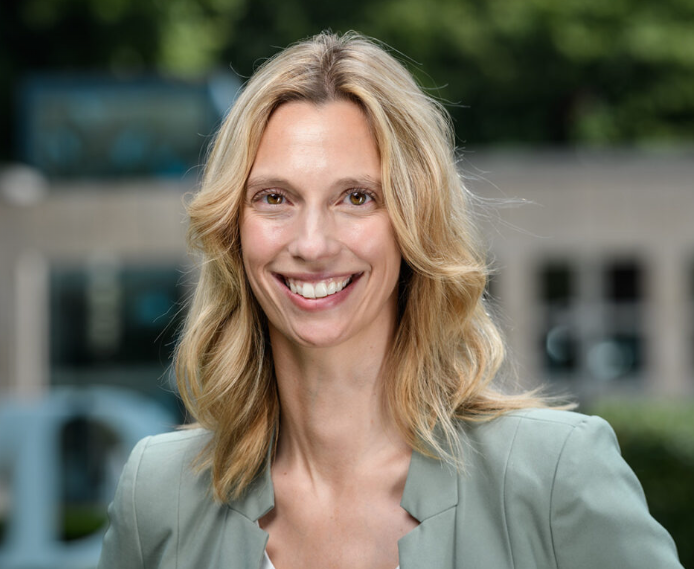
Professor, IMD
Julia Binder is Professor of Sustainable Innovation and Business Transformation at IMD Lausanne. She was named a World Economic Forum Young Global Leader 2025 and featured on the Thinkers50 Radar list in 2022. Julia is the co-author of The Circular Business Revolution and has spent over a decade helping organizations navigate the intersection of innovation and sustainability to drive real-world impact.